Skills
Labor, Work, and Survival on the Road
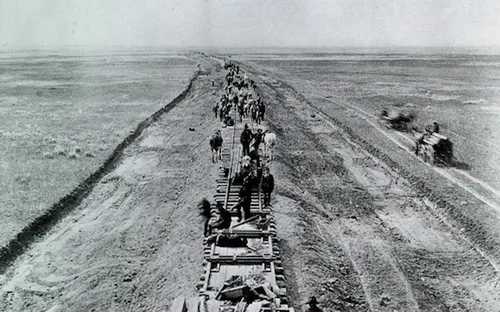
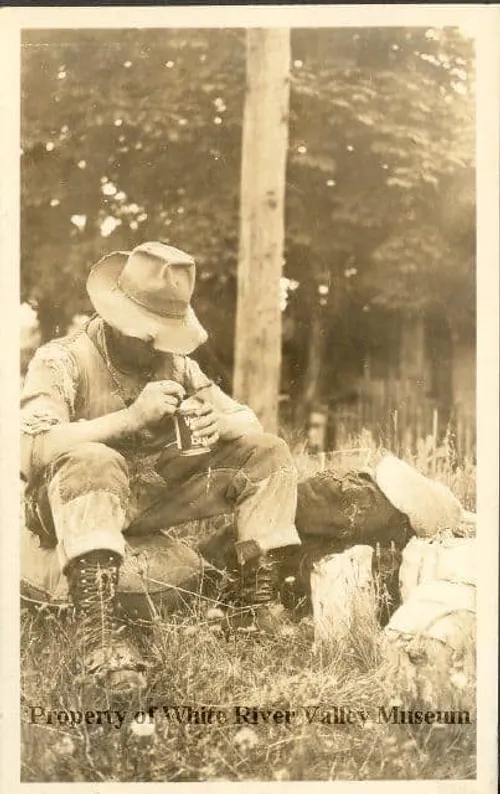
Farm laborers - Hobos carried tools like hoes and shovels in search of seasonal agricultural work.
Part I: Practical Skills for Survival
Reading the Landscape
A skilled hobo could read the landscape like a book. They learned to identify railroad lines by their characteristics—gauge, roadbed, the direction they traveled. They recognized regional vegetation and understood how geography shaped opportunities and dangers.
Rivers meant water and camps. Desert meant dehydration and death. Mountains meant cold nights but often steady work. Cities meant employment agencies but also police, bulls, and danger.
How to Navigate Without a Map:
- Study the stars at night—they point true north
- Follow river valleys—they often parallel rail lines
- Ask other hobos which direction they're heading and why
- Mark your path with hobo signs for those coming after
- Remember towns by distinctive features—water towers, grain elevators, bridges
- Learn the names of major junction towns and their connections
- Understand seasonal changes—what's safe in summer may be deadly in winter
Finding and Preparing Food
Hunger was constant. A hobo learned to forage—knowing which wild plants were edible, how to fish, how to hunt small game. But more importantly, they learned the geography of charity: which restaurants gave scraps, which farmers offered meals in exchange for work, which towns had missions or soup lines.
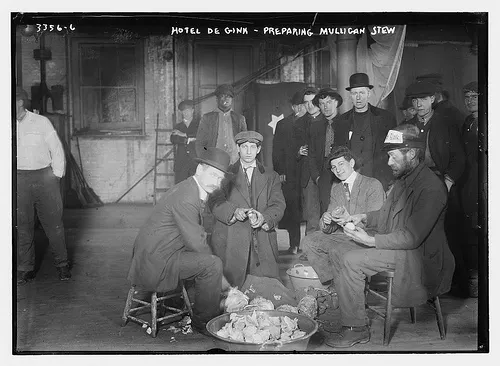
Most crucial was the skill of the jungle cook—transforming nothing into something nourishing.
The Mulligan Stew: Feeding Ten People on Nothing
- Gather scraps from farms, butchers, and garbage bins—anything edible
- Find a large pot (communal jungle property, or make one from found materials)
- Build a fire—knowing how to start one with limited materials
- Boil water for sanitation—this prevented sickness
- Add ingredients as people contribute them—no single person bears the cost
- Season with salt foraged, begged, or traded
- Cook until everything is soft (2-3 hours)
- Serve everyone equally—this was the rule
A good jungle cook was respected. They could make a meal that fed fifteen people from scraps that seemed worthless. The skill was part alchemy, part psychology—knowing how to encourage contributions and maintain morale.
Catching and Riding Trains
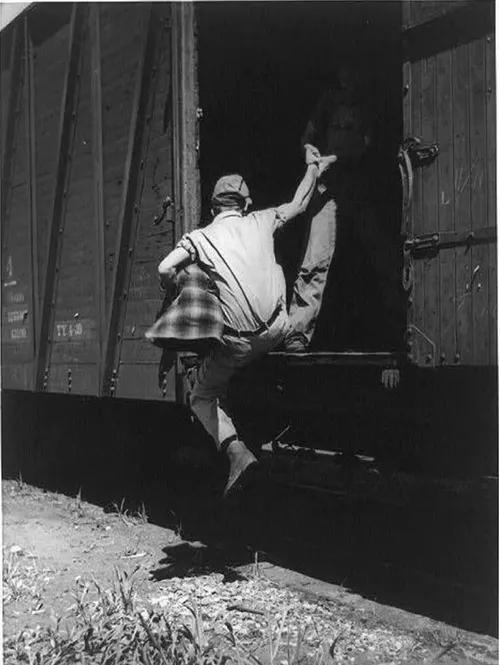
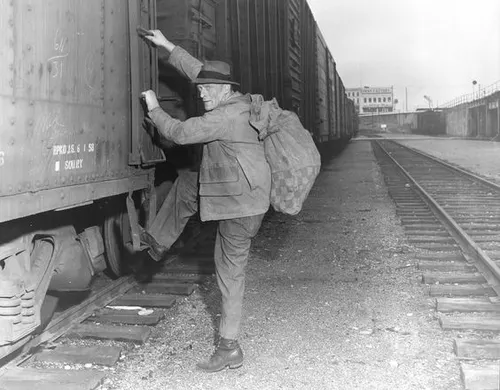
Not every hobo could catch a moving train. It required coordination, strength, timing, and the ability to judge speed and distance perfectly. Mistakes meant death—lost limbs, crushed under wheels, thrown from a moving train.
An experienced hobo learned to identify safe cars (empty boxcars, not freight cars carrying goods or machinery), understand the rhythm of a train's movement, know which yards had sympathetic workers and which had brutal bulls. They learned to read weather patterns that affected train movement and to understand the railroad's schedule.
Catching a Moving Freight Train
- Find a long straightaway where the train slows (3-5 mph)
- Run alongside the train, matching its speed
- Grab the side ladder or handhold with both hands—commit fully
- Pull yourself up and onto the car in one smooth motion
- Don't look down. Don't think. Just move.
- Once aboard, move to the interior of the boxcar for safety
- Hide before entering a town (bulls check trains regularly)
- Know your exits—if trouble comes, be ready to jump
The younger hobos learned from older ones. A mistake meant death or dismemberment. This wasn't exaggeration—railroad riding killed hobos regularly.
Negotiating with the World
Hobos were expert psychologists and negotiators. They knew how to approach a farmer for work and a meal. They understood the psychology of a small-town sheriff. They could read people and situations quickly and accurately.
This wasn't begging—it was negotiation. A hobo offered something in exchange: labor, skills, entertainment, company, protection. They understood that everyone had needs, and those needs could be met through exchange rather than charity.
Negotiating for a Meal and a Night's Work
- Approach a farm in the morning, not at mealtime (don't seem desperate)
- Be clean and presentable (appearance determines reception)
- Offer specific work: "I can split wood, fix fence, paint, repair that gate"
- Don't ask for charity, ask for fair exchange
- Work hard and without complaint
- Express gratitude genuinely—this matters
- Leave quietly when finished—don't overstay or expect more
- Leave word at the local hobo mark so others know it's a good spot
A reputation for honest work opened doors. A reputation for theft or violence closed them forever. Hobos understood that their most valuable asset was their word.
Staying Alive in Dangerous Situations
The rails were dangerous. Bulls were violent and unpredictable. Other hobos could be unstable. Harsh weather could kill. Sickness in a jungle could spread. An experienced hobo learned to recognize danger before it found you.
Survival required paranoia, caution, and trust in intuition. A feeling that something was wrong often meant it was.
The Rules of Survival
- Keep your money hidden in at least three places (nowhere is safe)
- Never sleep alone in a dangerous jungle
- If bulls approach, run—don't fight (you'll lose)
- Mark dangerous towns for other hobos ("Bull town—stay away")
- Leave a jungle at the first sign of trouble
- Trust your instincts—if something feels wrong, it is
- Build allies—a group is safer than one person
- Know first aid basics (cuts, infections, broken bones)
- Recognize signs of dangerous individuals (ginks, yeggs, mentally unstable)
- Keep emergency supplies hidden separately from your main kit
Reading and Making Hobo Signs
Hobos developed a system of marks and signs to communicate with each other. These signs were scratched, drawn, or chalked on railroad underpasses, fence posts, and buildings. They warned of danger, marked safe spots, and provided crucial information.
Common Hobo Signs and Their Meanings:
- Two interlocking circles = "Man and wife stay together"
- Circle with a dot = "Good drinking water"
- Triangle = "Kind hearted lady"
- Cat face = "Cats in house (rat traps)"
- Crossed lines = "Bad place—bars or bulls"
- Wavy lines = "Dangerous man"
- Circle with slash = "Jail—avoid"
- Knife and fork = "Food for work"
- X with dot = "Beware—dangerous dog"
- Upside-down triangle = "Dangerous for hobos"
These signs created an invisible network of information. A hobo could travel across America and know which towns to avoid, where to find work, where sympathetic people lived. The system was more reliable than any formal communication.
Traveling Light: The Art of the Minimal Life
A hobo's possession were limited by what they could carry. This constraint required skill—knowing what was essential, what could be replaced, what could be done without. Traveling light wasn't just practical; it was philosophical. It freed you from attachment to things.
The Essential Hobo Kit:
- Bedroll: Blanket or old quilt wrapped around other items for insulation
- Change of clothes: One extra shirt, one extra pair of pants, extra socks
- Cooking implements: Tin can for boiling water, can opener, spoon
- Container: Small sack or bag for carrying food and supplies
- Tool: Knife (could be used for multiple purposes)
- Rope: For binding bedroll and securing possessions
- Matches or flint: For starting fires (critical)
- Hat: Protection from sun and cold
- Shoes: The most important item—poor shoes meant disability
- Optional: Musical instrument (harmonica, guitar) for entertainment and money
Everything else was luxury. Most hobos wore what they had until it fell apart, then found replacement. They owned almost nothing but were free from the burden of maintaining possessions.
Part II: The Traveling Lifestyle
Hobo culture wasn't just a collection of survival skills—it was a way of life with its own rhythm, values, and understanding of freedom and community. To understand the hobo is to understand a fundamentally different way of living.
The Daily Rhythm of the Road
Morning: Wake before dawn to avoid being caught sleeping by bulls. Eat if you have food. Gather your kit and move to the next camp or yard before daylight. Check for hobos marks from the night before.
Mid-Morning: Look for work. Visit farms, construction sites, or businesses. Ask for odd jobs—splitting wood, painting, fixing fences. Farmers often preferred day workers to permanent employees.
Afternoon: Work if you found it. Travel if you didn't. This was the time to catch a train heading west or south. Many hobos preferred traveling in daylight on freight trains that slowed through towns.
Evening: Find a jungle or safe camp. Contribute to the communal meal if you have food. Share news of the road. This was when information circulated—which towns had work, which had mean bulls, which had kind-hearted ladies who gave meals.
Night: Sleep lightly. Keep your possessions close. Be ready to move if trouble came. Many hobos slept in shifts to watch for danger.
Movement and Seasons
Hobos didn't travel randomly. Their movement followed patterns—seasonal work, weather, the railroad schedules, and knowledge accumulated through years of experience.
Spring: Move north and west. Harvest was beginning. Construction jobs opened. Weather was warming. Jungles expanded as more hobos hit the road. Old-timers moved back north after wintering in the south.
Summer: Peak hobo season. Constant movement following the harvest from south to north. Steady work available. Jungles were large and well-organized. Weather was manageable—you could sleep outside without risk of freezing.
Fall: Move south. Harvest ending. Weather cooling. Some hobos settled temporarily, taking steady work before winter. Others moved toward warmer climates. This was dangerous season—movement was frantic, jungles were chaotic, weak or sick hobos died during the transition.
Winter: Most hobos moved south or found shelter. Northern jungles nearly emptied. Migrant workers moved to California or the Deep South where winter work existed. Hospitals in cities filled with hobos dying of exposure and pneumonia. This was the season when being on the road could kill you.
Community and Solitude
Hobo life was contradictory. It offered freedom and community, loneliness and brotherhood, independence and interdependence.
The Jungle was Community: Jungles were temporary cities. People shared meals, shared knowledge, shared danger. A good jungle had an informal government—elders made decisions, disputes were settled, thieves were punished. The jungle was family to people with no family.
The Road was Solitude: A hobo on the road was alone. Alone in a boxcar watching the landscape pass. Alone in a town looking for work. Alone with thoughts and memories. The road offered freedom but extracted loneliness as payment.
Both were necessary: A hobo needed the jungle for survival and the road for freedom. Spending too long in one place felt like prison. Spending too long on the road felt like dying. Most hobos moved between them, finding balance.
The Code: Hobo Ethics
Hobos had no government, no police, no formal rules. Yet they maintained order through an unwritten code. Breaking the code meant expulsion from jungles, isolation, sometimes violence.
The Core Principles:
- Don't steal from another hobo
- Share your food when someone is hungry
- Warn others of danger—both physical and legal
- Work when you can find it
- Don't bring heat (police attention) to a jungle
- Respect women—never force yourself on anyone
- Don't betray another hobo to authorities
- Leave a jungle better than you found it
- If you're sick, leave the jungle so you don't infect others
- Treat elders with respect—they know how to survive
These weren't rules written down. They were internalized, enforced through reputation and community pressure. A hobo who violated them found themselves unable to find shelter, food, or company. The ultimate punishment was isolation—which could mean death.
Work and Pride
A hobo was defined by work. The term itself meant a working person on the move. A hobo took pride in their labor—they worked hard, they worked honestly, they did skilled jobs well.
This was how they understood themselves. Not as bums, not as criminals, but as workers. They harvested crops that fed America. They built railroads that connected the country. They constructed buildings, repaired infrastructure, cut timber, mined ore.
The Great Depression confused this identity. Suddenly, work disappeared. A hobo who wanted to work couldn't find it. The code said "work when you can find it," but if there was no work, what did that make you? This existential crisis affected thousands of hobos during the 1930s.
Freedom and Its Costs
Why did people choose hobo life? The answer varies, but freedom is central to understanding it.
Freedom from routine: No boss telling you what to do. No job you had to keep. No house that owned you. You could wake up and decide to leave—to go somewhere new, try something different, follow an impulse.
Freedom from expectations: Society had expectations for you—get married, have children, build a house, settle down, accept your place. The road freed you from all that. You could be whoever you wanted.
Freedom from the past: If you had a bad history, debts, a criminal record, a failed marriage, a shameful secret—the road offered escape. A new town, a new name (moniker), a fresh start. Your past didn't follow you.
But freedom had costs:
- Hunger and poverty (constant)
- Danger (bulls, criminals, harsh weather)
- Loneliness (despite community in jungles)
- No security (what happens if you get sick or injured?)
- No family (you left them or they left you)
- No home (nowhere to return to)
- Aging (what happens to a 60-year-old hobo with bad health?)
Freedom and hardship were inseparable. You couldn't have one without the other.