History
From the Rails to the Depression: The Evolution of American Hobo Culture
The Birth of the Hobo
The Civil War ended in 1865. Thousands of demobilized soldiers and unemployed men took to the rails. The transcontinental railroad, completed in 1869, created unprecedented opportunities for travel—and unemployment. Men who rode the rails seeking work became known as "hobos," distinct from bums (who didn't work) and tramps (who didn't want to work).
The hobo was a working man on the move, following the harvest, the rails, and the jobs. American railroads expanded explosively, and with them came the hobo.
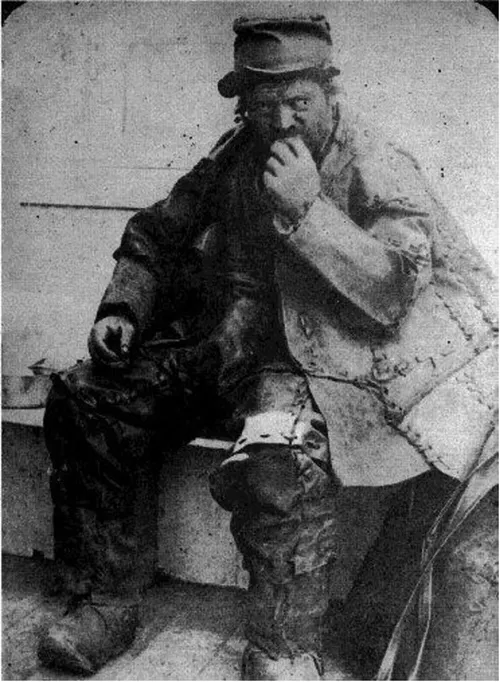
Letherman - The original hobo, 1885. Considered the first to ride the rails and establish the culture.
The Golden Age of Hobos
By the 1890s, hobo culture was thriving. Hundreds of thousands rode the rails. Hobo camps—called "jungles"—existed along every major railway. An informal code of ethics emerged: share your food, don't steal from your fellow traveler, warn others of danger, work when you can.
Industrial America needed migrant labor for mining, logging, agriculture, and construction. Hobos built America. They also organized: the first hobo convention was held in Cincinnati in 1904, with President Theodore Roosevelt invited as an honorary guest.
This was the peak. The hobo was a recognized figure in American society—sometimes celebrated, often condemned, but always present.
The Roaring Twenties & Prohibition
The 1920s brought prosperity to some and continued hardship for others. Prohibition created new criminal opportunities. Some hobos engaged with bootleggers and illicit economies. But most continued their traditional patterns: following the harvest, riding the freight trains, working seasonal jobs.
The railroad industry began consolidating and modernizing, reducing the need for migrant labor. New technologies threatened the hobo way of life. But in 1920s, the culture remained resilient and visible in America's cities, towns, and railroad yards.
The Great Depression & The Desperate Years
October 1929. The stock market crashed. The Great Depression began.
Suddenly, millions who had never considered riding the rails became hobos by necessity. The number of hobos on American railroads exploded from hundreds of thousands to estimates of 2-3 million people. Entire families rode freight trains. Children were born in hobo camps. The hobo became a symbol of economic catastrophe.
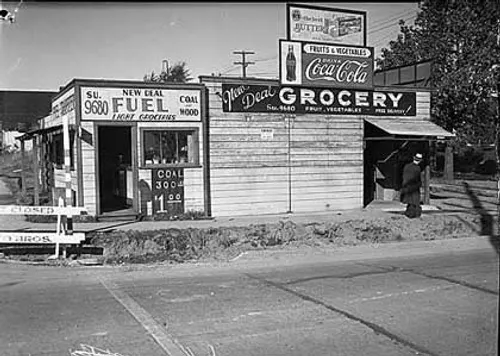
Depression Economics - 1935. New Deal programs attempted to put people back to work during the economic crisis.
Hobo jungles grew larger. Soup lines extended for blocks. Government programs like the Civilian Conservation Corps and the Works Progress Administration attempted to put people to work. But for millions, the rails remained the only hope.
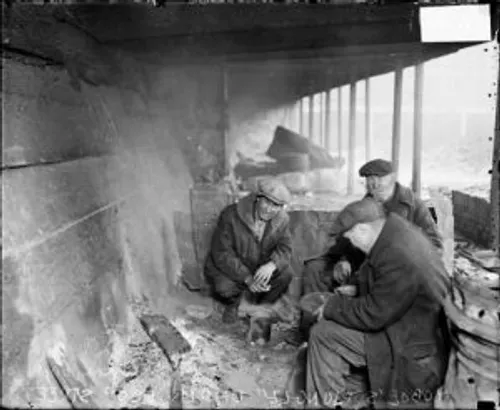
Chicago, 1929 - Three travelers during the onset of the Great Depression.
Photographers from the Farm Security Administration (FSA) documented this era. Their powerful images captured the dignity and desperation of hobo life: makeshift camps, freight train riders, faces marked by hardship but not broken.
World War II & After
World War II changed everything. Military recruitment removed millions of young men from unemployment. War production put the economy back to work. The need for migrant labor returned. Some hobos enlisted; others found steady work in factories and on farms.
But the structure of hobo life was already fading. Railroads increasingly used locked freight cars. Automobiles became more common. The need for migrant workers declined as mechanization advanced. By the 1950s, the hobo was becoming a relic of the past—a symbol of a bygone America.
The Modern Era & Legacy
The classic hobo era ended sometime between 1940 and 1960. Fewer people ride the rails out of necessity. The hobo as a working migrant became obsolete.
But the culture persists. Some ride the rails by choice, keeping the tradition alive. Hobo conventions continue. The hobo ethos—self-reliance, freedom, mobility, community solidarity—influences American culture. In literature, music, and folklore, the hobo remains iconic.
Today, we preserve and honor this history not to romanticize poverty or suffering, but to recognize the resilience, ingenuity, and humanity of people who survived by their wits and their work. The hobo story is an American story: of struggle, community, and the human spirit.