Music
Songs, Ballads, and the Ballad Singers
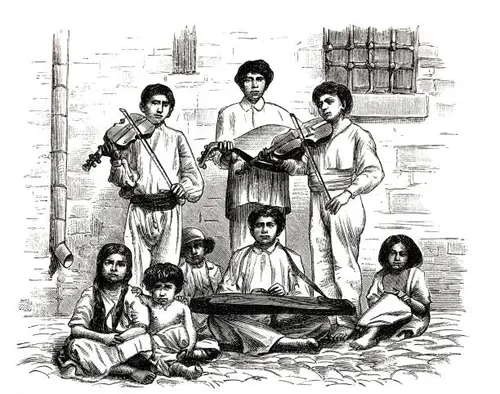
Street musicians - Hobos earned money and meals through busking and musical performances.
Hobos sang. In jungle camps around fires, on trains rolling through the night, in towns looking for work—they sang. Their songs were about loneliness, resilience, love, loss, and the eternal pull of the road. These songs told stories that newspapers couldn't capture and expressed pain that words alone couldn't hold.
The hobo's guitar wasn't a luxury—it was a tool. It could earn a meal, build community, and keep a person's spirit alive when everything else was taken.
Brother, Can You Spare a Dime?
Perhaps the anthem of the Great Depression. This song captures the dignity, pride, and heartbreak of a hobo who fought in World War I and was now on the streets. It's a direct confrontation with a society that had abandoned him.
And so I followed the mob—
When there was earth to plow or guns to bear
I was always there, right on the job.
They used to tell me I was building a dream
With peace and glory ahead—
Why should I be standing in line
Just waiting for bread?
Brother, can you spare a dime?
This song was banned by some radio stations for being "communist propaganda." It simply told the truth.
Goin' Down the Road Feelin' Bad
One of the most famous hobo songs, captured many times by many musicians. It expresses the fundamental sadness of the road—leaving home, losing love, traveling endlessly without destination or hope. Yet there's also resilience in it: you keep going because that's what you do.
I've got the blues and I ain't satisfied
I'm going down the road feelin' bad
I won't be back till I'm satisfied
I'm going where the cold wind blows
In the New York snow
I'm going to find my baby
If she don't want me no more
The song has been recorded dozens of times—by Woody Guthrie, Bessie Smith, and many others. Each version adds something new, but the core message remains: heartbreak, movement, and the human need to keep moving forward.
The Ballad of the Freight Train Riders
This song celebrates the hobo's mode of transportation—the freight train. It's about freedom, movement, and defiance. The railroad owned the trains, but the hobos rode them anyway, following their own roads.
On the freight trains passing by
From the East Coast to the West
We don't stop, we don't rest
Got no tickets, got no pay
Just our lives to give away
On the rails we ride so free
This is where we're meant to be
Not a sad song—a defiant one. It claims the freedom of the rails even in the face of poverty and danger.
Hard Times Come Again No More
Written decades before the Great Depression, this song speaks to universal hardship. Foster understood poverty and loss. The hobo version transforms it into a song about homelessness and displacement.
While we all sup sorrow with the poor
There's a song that will linger forever in our ears—
Oh! Hard times come again no more.
'Tis the song, the sigh of the weary
Hard times, hard times come again no more
Many days you have lingered around my cabin door
Oh! Hard times come again no more.
A plea for compassion and a recognition that we're all vulnerable to life's reversals.
Home Sweet Home
A song of profound sadness for hobos. "Home, Sweet Home" is about loss of home. Many hobos sang this late at night, alone, remembering the homes they'd left or lost.
Be it ever so humble, there's no place like home
A charm from the sky seems to hallow us there,
Which, seek through the world, is ne'er met with elsewhere.
Home, home, sweet, sweet home
There's no place like home, oh, there's no place like home.
For the hobo, home was lost, impossible, or only a memory. This song captured that grief.