Art & Trade
The Creative Economy of the Road: How Hobos Made, Traded, and Sold Art
Hobos were not just workers and survivors—they were artists. In boxcars, hobo camps, and street corners, they created art. They carved, drew, painted, and engraved. They made music and poetry. They crafted functional art from scrap materials. And they traded this art for the things they needed: food, shelter, money.
Hobo art was born from necessity but grew into something more—a creative expression of beauty, humor, and humanity. It was a way to maintain dignity in poverty, to create value from nothing, and to connect with others through something beautiful.
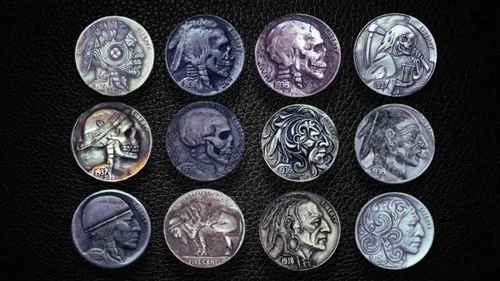
Hobo nickels - Transforming a 5¢ coin into art worth 25¢ or more through skilled carving and engraving.
Hobo Nickels & Coin Art
The Art of the Hobo Nickel
The hobo nickel is perhaps the most iconic form of hobo art. It began in the 1920s and reached its peak during the Great Depression. A hobo with a knife and a steady hand could take a U.S. nickel (which cost 5 cents) and transform it into a work of art—then trade it for 25 cents or more.
The process required skill. The hobos would use knives, files, and other tools to scrape away the original design and replace it with their own. Some created portraits—faces of remarkable detail and expression. Others created elaborate designs—landscapes, castles, circus scenes, elaborate patterns. The best hobo nickel artists became legendary, and their work is now collected by museums and serious collectors.
The economics were simple: spend an hour carving a nickel, sell it for a quarter. That quarter meant a meal, a night's shelter, enough to survive a few more days. But the art was real—these weren't crude scratches. The best hobo nickel work showed genuine artistic talent.
The Buffalo Head: The most popular design. Hobos would carve the buffalo on the reverse of the nickel, often transforming it into a human face, a skull, or an elaborate scene. The buffalo's natural lines lent themselves to creative reinterpretation.
Skull Nickels: Memento mori—reminders of death. Hobos transformed the buffalo into skulls with elaborate designs—crossbones, hourglasses, angels of death. These were popular during the Depression, when death was common.
Face Nickels: Hobos carved human faces—sometimes realistic, sometimes grotesque. Portraits of friends, imagined characters, caricatures of famous people. The best face carvers could create expressions that seemed alive.
Castle Nickels: Elaborate castle and tower designs. These required patience and precision but created stunning results. A well-executed castle nickel could sell for a dollar or more.
Scenic Nickels: Mountains, trains, landscapes, ships. These showed that hobos were thinking about and documenting the world they traveled through.
Today, authentic hobo nickels are collected and sold for $100-$1000 each, sometimes more. Museum collections consider them important American folk art. But during the Depression, their value was measured in meals, not dollars.
Carved & Engraved Art
Beyond the Nickel: Engraved Art
Hobo nickels were just one form of engraved art. Hobos also carved wooden spoons, bones, walking sticks, and found materials. A hobo with an artistic hand could transform a piece of scrap into something beautiful—and saleable.
Hobos carved elaborate walking sticks from branches, decorating them with intricate patterns, scenes from the road, and personal symbols. A fine carved stick served both as a tool and as evidence of artistic skill. They were traded or sold for money and supplies.
From bones found along the road, hobos created small sculptures—animals, faces, abstract designs. Bone carving was portable and didn't require expensive materials. A skilled bone carver could create pieces that sold for several dollars.
Wooden spoons decorated with intricate handles, carved patterns, and personal designs. These were both functional and beautiful. A hobo could carve a spoon, use it for a meal, then trade or sell it.
Hobos found horseshoes along the road and reshaped them into decorative pieces—horseshoe gates for gardens, decorative frames, good-luck charms. The skill required—working with metal tools and physical force—separated horseshoe artists from other crafters.
All these items required significant skill but minimal materials. A hobo with a knife, some found wood or bone, and time could create valuable trade goods.
Drawing, Painting & Watercolor
Two-Dimensional Art
Not all hobo art required carving. Some hobos were skilled drawers and painters. They worked with pencils, charcoal, and paint—often materials begged or traded for. They created portraits, landscapes, circus scenes, and personal compositions.
The subjects of hobo art reveal their interests and preoccupations: trains and freight cars, circus performers and traveling shows, beautiful women (often imagined), landscapes from their travels, animals, and scenes of hobo life itself. Some hobos documented their experiences in sketchbooks, creating visual records of the road.
Hobos were fascinated by traveling circuses and vaudeville shows. They created colorful drawings of performers, animals, tents, and scenes of entertainment. These drawings were sometimes traded as gifts to circus performers they met.
The object of their journey became a favorite subject. Hobos drew steam locomotives, boxcars, rail yards, and dramatic scenes of train riding. These drawings functioned as both personal expression and documentation.
Some hobo artists specialized in portraits—quick sketches of people they met on the road. A skilled portrait artist could earn money from townspeople or fellow travelers who wanted their image captured.
Watercolor paintings and pencil drawings of the landscapes they passed through. These served as personal memories and also as beautiful objects that could be traded or sold.
The advantage of drawing and painting was portability. A hobo could carry pencils and paper easily, or trade for them. The disadvantage was that these works required materials that cost money—unlike carving, which used found objects.
Music, Performance & Poetry
The Performing Arts
Many hobos earned money through performance. With a guitar, harmonica, or simply their voice, they could draw a crowd and collect money. These weren't trained musicians—many were self-taught—but they understood that art could be traded for food and shelter.
In towns and cities, hobos performed for coins. A hobo with a guitar could play in parks, on corners, or outside restaurants. They sang hobo songs, folk songs, blues, and popular music. A skilled performer could earn several dollars a day this way.
The harmonica was the perfect instrument for hobos—portable, cheap, and capable of producing beautiful music. A hobo could carry a harmonica in their pocket and play anywhere. Many hobos learned to play, and the best became local celebrities in the towns they visited regularly.
Some hobos were songwriters. They created songs about their experiences, about the road, about love lost, about hardship. These songs spread through the hobo network, sung in jungles and on trains. The best songs became part of folk tradition.
Not all hobo art was visual or musical. Some hobos were poets and storytellers. They created verses about the road, about freedom, about hardship. They told stories in jungles that entertained and educated. Good storytellers became valued members of communities.
The Trading Economy of the Road
How Hobos Made and Traded Art for Survival
Hobo art existed within an economy. Hobos created art not primarily for artistic expression but for trade. They needed to exchange their creations for food, shelter, and money. Understanding this economy reveals how creativity became survival.
Cost of materials: 5 cents (the nickel). Time required: 30 minutes to 2 hours. Selling price: 25 cents to 1 dollar. Profit: 20-95 cents. For a hobo, this represented a full meal or a night's shelter. A skilled carver could produce multiple nickels per day.
A good performer could earn 50 cents to 2 dollars per day in a busy town. This was comparable to day labor but required no contacts, no convincing, no risk of being turned away. The disadvantage: some days no one stopped to listen.
Some hobos got commissions. A townsperson might pay a hobo artist to carve something specific, or paint a portrait. These commissions could pay 50 cents to several dollars—significant money that could sustain a hobo for a week.
Not all hobo art was sold for money. Much was bartered. A farmer might trade a meal and shelter in exchange for a carved walking stick. A shopkeeper might give supplies for an engraved nickel. Trade allowed hobos to get what they needed without money.
The Key Insight: Hobo art transformed time and skill into survival resources. A hobo who lacked money or job opportunities could still survive through art. The better the artist, the better their chances.
Odd Jobs & Creative Survival
Beyond art, hobos supported themselves through "odd jobs"—small, unregular work that required minimal connections or credentials.
Fixing household items, tools, furniture. A hobo with mechanical skill could earn money repairing broken things in towns. This required some tools but often those could be borrowed or found.
House painting, fence painting, whitewashing. These jobs required physical skill but no special credentials. A hobo could earn 50 cents to a dollar per day doing this work.
Cutting wood, raking leaves, clearing land, gardening. Farmers and townspeople had jobs that didn't fit a regular worker's schedule. A hobo could do this work and move on.
Dirty work that regular workers avoided. Cleaning out stables, hauling garbage, cleaning yards. This work was unglamorous but always available in towns.
Fruit picking, grain harvest, hop picking. These jobs were seasonal and paid based on productivity. A strong worker could earn several dollars per day during harvest season.
The combination of artistic work, performance, and odd jobs allowed hobos to survive without depending on single employers or stable positions. They built diverse income streams.
The Philosophy of Hobo Creativity
Hobo art wasn't just economic. It was philosophical and spiritual. In a world that treated hobos as less than human, art asserted their humanity and dignity.
Art as proof of worth: A beautiful hobo nickel or a well-sung song proved that hobos had value, that they could create beauty and meaning. In a society that rejected them, they created proof of their own worth.
Art as freedom: Creating art was an act of freedom. It required nothing but imagination and skill. A hobo could create art anywhere, anytime, without permission or approval. This freedom mattered.
Art as connection: Art connected hobos to each other and to the world they passed through. Songs and stories shared in jungles created community. Art traded with townspeople created momentary human connection despite economic inequality.
Art as memory: Many hobo artists created works that documented their experiences. Sketches of the road, songs about the journey, carved images of places visited—these became records of lives that would otherwise leave no trace.