Stories
Personal Narratives and Lives on the Road
The Railroad Kid
Tommy was seventeen when his father lost his job at the mill. With three younger siblings and a mother who couldn't feed them all, Tommy made a decision that would define the next five years of his life: he'd catch a freight train west and send money home.
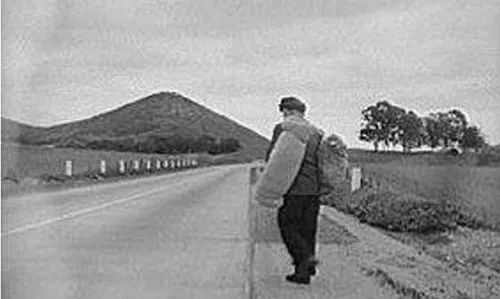
A hobo with bedroll and all possessions on his back, traveling the highways seeking work.
His first ride was terrifying. An older hobo named Frank helped him onto a moving train, showed him how to grip the ladder, how to judge his jump. "You fall," Frank said, "you lose a leg or your life. So don't fall."
Tommy worked the harvest in California, laid track in Colorado, cut timber in Oregon. He sent every dollar home. By 1938, the economy was beginning to recover. Tommy came home, got a job at a shipyard, got married, had kids of his own. He never forgot the rails or Frank, who had shown him kindness when he was lost.
The Traveling Family
Sarah and James boarded a westbound freight train in 1932 with their three children, all their possessions in two suitcases. James had been a factory worker in Pittsburgh, but the factory closed. Sarah had managed a small boarding house, but there was no money for rent. The rails became their only option.
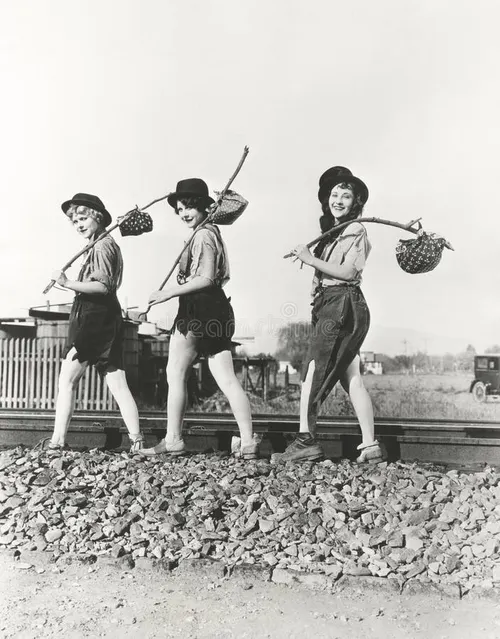
Female hobos - Many women, including mothers and children, rode the rails during the Depression seeking survival and work.
For three years, the family traveled across America. They slept in hobo jungles, shared stews made in communal pots, and taught their children to read by lamplight in boxcars. The oldest boy, Michael, learned the railroad map of America by age nine. The middle child, Emma, could negotiate with railroad bulls (security guards) before she was twelve.
By 1935, James found steady work on a farm in California. The family settled. Michael became a railroad engineer. Emma became a teacher. They never forgot their years on the rails—those years shaped who they were.
The Code That Kept Them Alive
Every hobo jungle had an unwritten code. Don't steal from another hobo. Share your food when someone's hungry. Warn others of danger—mean railroad police, dangerous curves, bad camps. If you got work, remember those who helped you.
These weren't just suggestions. In a world without laws, these rules kept people alive. A hobo who violated them was ostracized or worse. A hobo who lived by them became part of a community, even if that community existed only under railroad bridges and in makeshift camps.
The hobo code represented something deeper: human dignity maintained in desperate circumstances. It was the code of the road, passed down through stories and experiences, that transformed individual struggles into collective survival.
Where the Road Ended
Old Pete (no one knew his real name anymore) had ridden the rails for forty years. He'd traveled every major rail line in America, worked every kind of job, survived two winters in Canada and countless encounters with railroad police. He'd buried friends in anonymous graves in towns he couldn't remember.
By 1950, Pete was in his sixties. His legs ached. His lungs were damaged from years of cold nights and dust. A young couple, themselves former hobos who'd settled down, offered him work maintaining their small farm in Kansas. It wasn't glamorous. But it was stable. It was home.
Pete lived another twenty years on that Kansas farm. He never rode the rails again. But he spent every evening telling stories to the grandchildren of the couple who'd taken him in—stories of the road, the people, the endless sky from the top of a boxcar.