Notable Hobos
Legends, Writers, and Figures of the Road
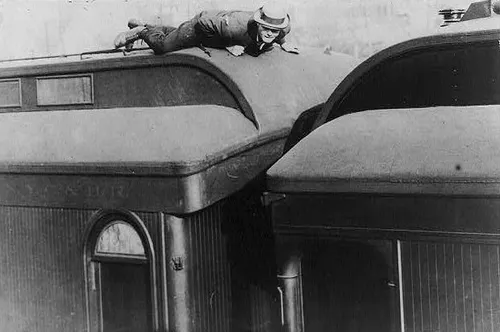
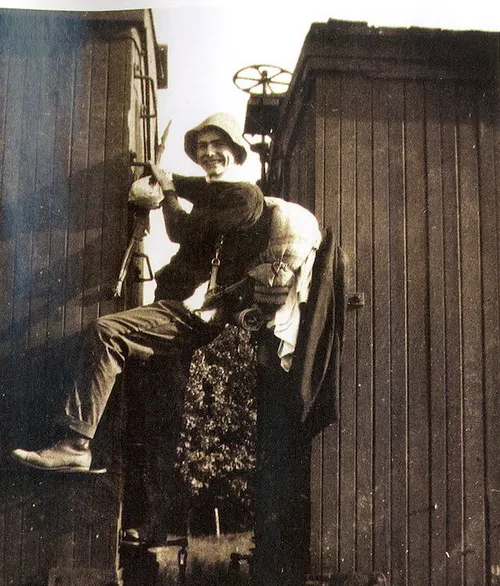
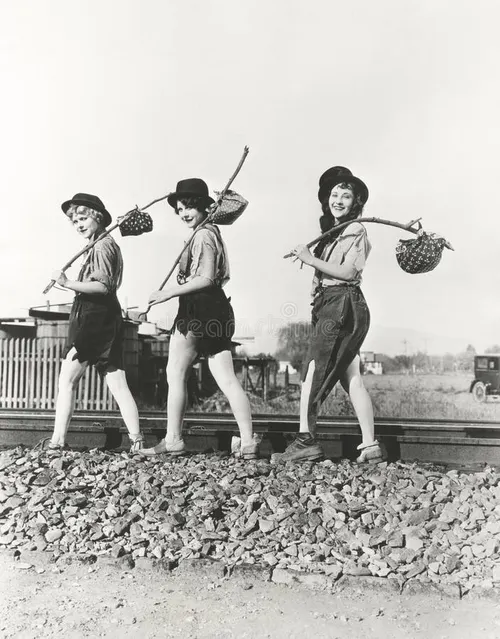
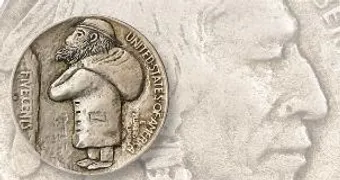
Ernest Hemingway - The renowned writer lived the hobo life, which influenced his literature and worldview.
Most hobos are forgotten. Their names are lost, their stories untold. But some achieved fame—either during their hobo years or later. These are the legends: the men and women whose stories survived, whose impact reached beyond the rails.
Woody Guthrie
Born in Okemah, Oklahoma, Woody Guthrie rode the rails during the Great Depression and became the voice of hobo and working-class America. His guitar bore the words: "This machine kills fascists."
Guthrie wrote "Pastures of Plenty," "Blowin' Down That Road," and "This Land Is Your Land." He didn't sing pretty—he sang truth. He rode with migrant workers, lived in their camps, and translated their suffering into folk music that would influence generations.
A-No. 1
Leon Ray Livingston, known as A-No. 1, was perhaps the most famous hobo of his era. He rode the rails for over 50 years and became a writer, lecturer, and advocate for hobos. He authored numerous books about hobo life and argued that hobos deserved respect and recognition.
A-No. 1 was a bridge between hobo culture and mainstream America. He appeared in newspapers, gave lectures, and insisted that hobos were workers, not vagrants or criminals. He maintained a code of honor and taught others the hobo way.
Boxcar Bertha Thompson
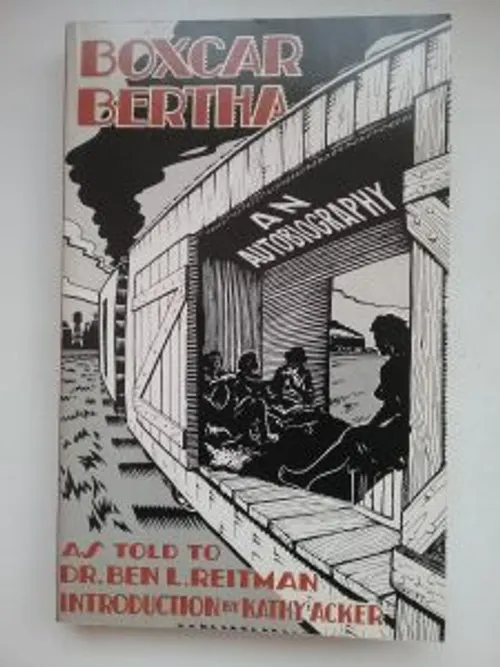
In an era when most hobos were male, Bertha Thompson rode the rails as a woman. She worked as a farmhand, hopped freight trains, rode across America, and wrote about her experiences. Her autobiography, "Sister of the Road," became a historical document of Depression-era hobo life.
Bertha's story challenged stereotypes. She was tough, independent, and refused to apologize for the life she chose. She proved that women could survive on the road, that they could work, fight, and thrive in a male-dominated hobo culture.
Jack London
Before he became a famous novelist, Jack London rode the rails. His experiences informed novels like "The Iron Heel" and essays that romanticized hobo life while also revealing its harsh realities. London understood the appeal of the road: freedom, adventure, escape.
London's writing brought hobo culture into American literature. He made it clear that the road wasn't just poverty—it was also choice, rebellion, and a search for meaning. His work influenced how America understood and imagined the hobo.
Empty Pocket Pete
Empty Pocket Pete may not have been a single person—he may be a composite of many hobos or a figure of legend. But his name appears in hobo lore across America: a hobo of unmatched skill and wisdom, known for his kindness and his ability to survive anything.
Stories of Empty Pocket Pete were told in jungles, written on railroad underpasses, and passed mouth-to-mouth through the hobo network. He represented the ideal hobo: ethical, skilled, generous, and free.