
A fire low enough not to draw a bull. A pot that once held lard. A potato, an onion, a scrap of meat—or a turtle from the creek. Men wash what they use. News of wages and “horstile” towns travels with the steam.
Life on the rails named the jungle beside bulls and freights. This room stays there. Trackside camps—where riders gathered between freights and flops—are American heritage: where they sat, how etiquette kept them open, what a shared mulligan meant, and how foodways looked when a camera stopped by. It is not a camping guide, not a recipe to recreate, and not advice on boarding trains.

What a jungle was
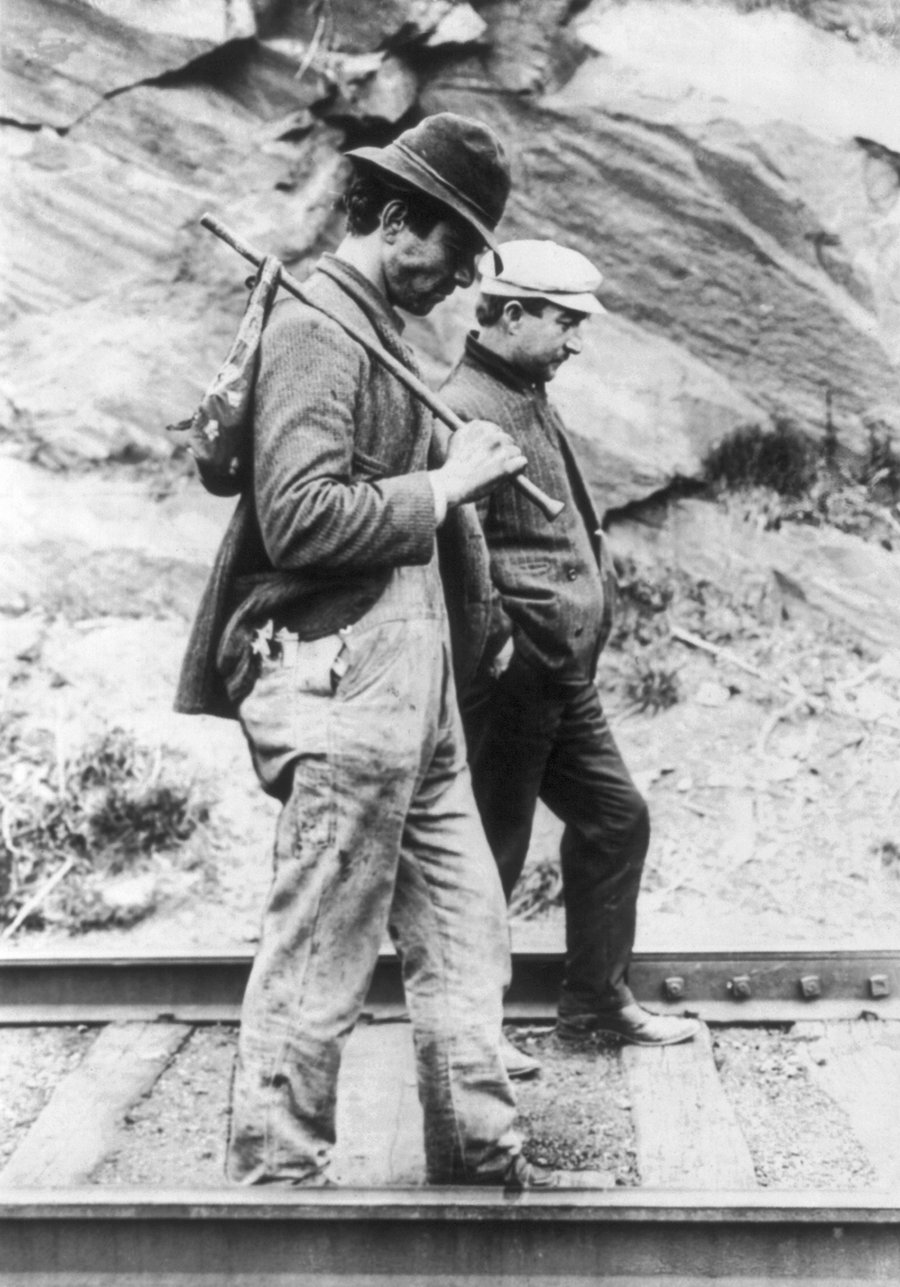
Jungles sat near water and junctions: a creek for washing, a spur or embankment for cover, walking distance to a yard or stem without sleeping on the stem’s floors. Nels Anderson’s Chicago fieldwork and a long run of memoirs (London, Tully, and later riders) describe camps that mixed migratory workers with men between jobs, and sometimes with thieves who used the same ground. Nationally many jungles were mixed; in parts of the Jim Crow South, custom and policing made mixed camps harder and more dangerous (see Black travelers & Jim Crow).
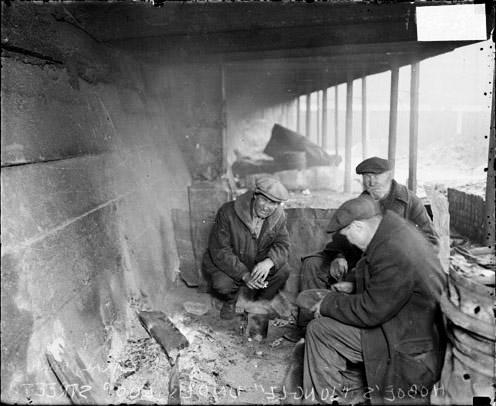
Some jungles were temporary overnight stops. Others became seasonal villages when a harvest or construction job held men nearby. Urban jungles—like the Chicago Loop underside in the 1929 plate above, or camps Anderson noted behind the Field Museum—blurred into Hobohemia’s outdoor edge. Treat “the jungle” as a type of place, not a single famous clearing on a postcard.
Jungle etiquette
Informal rules mattered more than any parchment. Leave pots clean. Keep fires small. Share what you can. Do not prey on sleepers. Pitch in when the camp is a community jungle. The despised jungle buzzard sponged or preyed instead of contributing. Those norms overlap the circulated ethical code in Ethical code—mutual aid as survival, not sentiment. Anderson recorded the expectation that a man with more than enough offered food to a neighbor who was not eating.
Etiquette did not abolish danger. Jack-rollers robbed sleeping men; hi-jacking and expulsion stories run through papers and memoirs. The Soft romance of the mulligan pot and the hard archive of assault shared the same ground—pair this room with the ethics chapter’s “romance vs archive” note.
Mulligan stew and foodways
A mulligan was a stew made from whatever each person could contribute: a potato, an onion, a bit of meat, scavenged vegetables, sometimes leftovers from a mission or a back-door “lump.” The point was the shared pot, not a fixed recipe. Coffee cans and lard pails doubled as cookware. Boiling up—washing clothes in heated water—shared the same fire logic as cooking: clean enough to be allowed to stay near town.
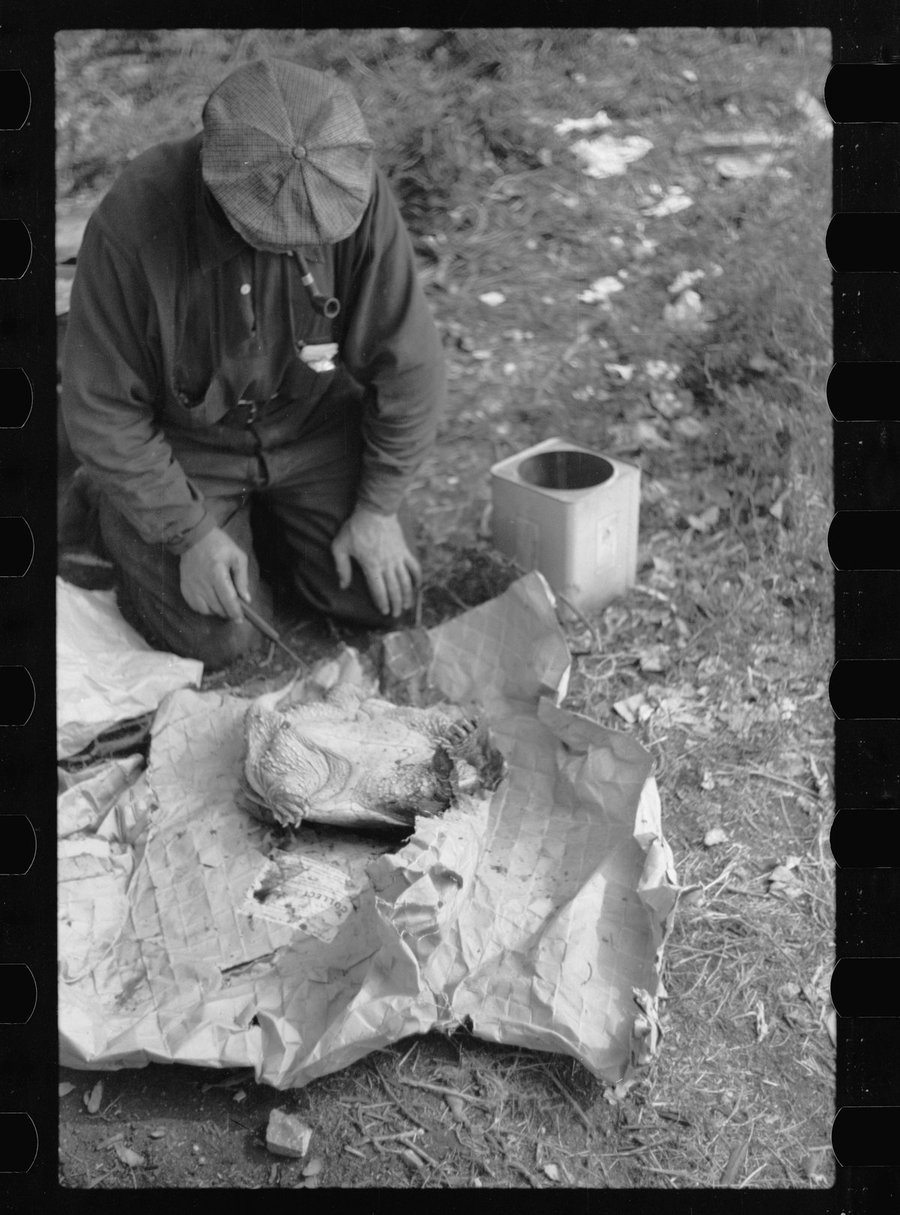
Cameras occasionally caught other jungle foodways. In September 1939, FSA photographer John Vachon photographed a man in a Minneapolis jungle preparing a snapping turtle for soup—resourceful protein beside a cut-open tin. That plate is heritage documentation of Depression-era improvisation, not a menu recommendation. Twin Cities jungles sat on the outdoor edge of the Gateway labor geography treated in urban stem rooms.
From jungle to circuit
Life on the rails sketched jungles beside bulls and freights. This room slows down on camp and food. The next chapter follows why men left the jungle at all: the work circuits—wheat, timber, track, ice, fruit—that turned a shared pot into a stake and a stake into another ride.
See Sources for works and archives cited in this room.