
On Main Avenue South in Britt, a former movie house holds bindles, photographs, and king-and-queen cases—proof that a town decided this history belonged under a roof twelve months a year, not only for one August weekend.
The previous room closed on Tourist Union No. 63’s long arc from boxcar organizing to living heritage festival. This chapter is what that festival leaves behind when the tents come down: the National Hobo Museum in the old Chief Theater, the Queen’s Garden across the street, a jungle boxcar a block off Main, and a cemetery section where riders who “caught the Westbound” are remembered. It is also who still comes—old-time riders, rubber tramps, heritage families—and how a small Iowa town keeps the ritual going while the freights themselves have grown more dangerous and more illegal. The safety coda waits one door ahead in Then and now.
The Museum in the Chief Theater
At 51 Main Avenue South stands the National Hobo Museum, owned and operated today by the Britt Hobo Days Association. Its permanent home is the former Chief Movie Theatre—opened as the Princess Theater on October 10, 1912, renamed the Chief on August 20, 1949, and later converted from a one-screen house into museum floor space, a small documentary theater, archives, and a gift shop. Midwestern civic buildings often get second lives; Britt gave this one to the road.
The museum began as the dream of three lifelong hobos and former Hobo Kings who, with Britt residents, formed the Hobo Foundation in the mid-1970s. City and Association accounts agree on the next chapter: in the early 1980s a single box of artifacts and a gift of money from an unknown hobo made a Main Street purchase possible. Artifacts arrived from kings and queens, collectors, and families of riders who had died—donations that turned private grief into public display. Cases now hold material associated with Steam Train Maury, the Pennsylvania Kid, Connecticut Slim, the Hard Rock Kid, Frisco Jack, and others. A small theater screens documentaries; shelves hold written documents and audio. Admission and hours change with the season—Memorial Day through Labor Day on posted days, appointment otherwise—so check the City of Britt or Britt Hobo Days pages before travel.
What a Visitor Sees in August
The second weekend of August is when Britt’s year-round map and Tourist Union No. 63’s convention meet. Official schedules and press coverage of recent conventions describe a repeating arc: Thursday evening fire lighting and a Four Winds Ceremony at the Hobo Jungle; Friday morning Hobo Memorial Service at Evergreen Cemetery; Saturday’s giant parade through town; free mulligan stew by the vat in city park after the parade; and king-and-queen speeches and crowning by crowd applause. The temporary jungle—with its boxcar, a block off Main on Diagonal—hosts stories, song, crafts, and campfire talk. The museum and a Hobo Art Gallery open longer hours. A carnival, craft shows, and local fundraisers fill Main Avenue. None of that replaces the previous room’s history of how the gathering began; it is the living choreography that history now wears.
Who Still Comes
Ask who fills the jungle today and the answer is plural. Smithsonian reporting from a recent Britt gathering still finds riders who know freight cars beside hobbyists, historians, and fans. A University of Northern Iowa field study of the convention distinguished older travelers who now move mostly by truck, car, or RV—sometimes calling themselves rubber tramps or rubber hobos—from younger people still drawn to train culture. Many rubber tramps define a hobo as someone with the desire to travel and the will to work; they may have ridden recreationally once, but their August arrival is legal and wheeled. Heritage families return for coronations, memorials, and museum cases that hold a relative’s moniker. Local volunteers—Association members, stew cooks, parade marshals—make the weekend possible. Named “town grandmas” of folklore are harder to pin; leave romantic nicknames aside unless a primary source attaches them. What is solid is the mix: road veterans, rubber-tramp elders, curious visitors, and Britt residents who treat Hobo Days as civic identity.
Cemetery, Garden, and Jungle
Across from the museum sits the Queen’s Garden. Northeast in Evergreen Cemetery lies the National Hobo Cemetery / National Hobo Memorial section—dedicated around 1990 in local reporting—where Friday’s memorial service gathers. Waymarking and Iowa gravestone surveys describe dozens of graves and concrete memorials: some mark actual interments; others honor regular conventioneers buried elsewhere. Maurice “Steam Train Maury” Graham (1917–2006), five-time king and later Grand Patriarch, is documented at the National Hobo Memorial in Britt; Find a Grave and Iowa Gravestones place him there after his death in Ohio. Memorial-service lists in the regional press have named Cinderbox Cindy, Lord Open Road, Connecticut Slim, and others—treat undated roll calls as heritage lore until burial versus marker is confirmed locally. The Hard Rock Kid, for example, appears in Britt memorial culture, while University of Iowa Hobo Archive material places his funeral in Ogden, Iowa—exactly the burial-versus-marker distinction this museum already flagged.
The Hobo Jungle with boxcar, a block off Main on Diagonal, is the weekend’s social hearth and a year-round landmark. Together museum, garden, cemetery, and jungle form Britt’s walkable archive: cases under a roof, names under stone, fire under open sky.
How Britt Sustains It
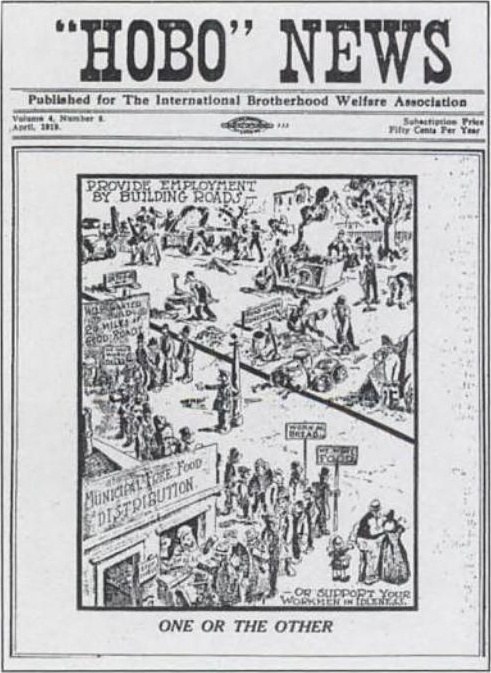
A town of a few thousand cannot host a national gathering by accident. The Britt Hobo Days Association—nonprofit steward of museum and weekend—recruits volunteers, posts schedules, opens the theater-museum, and partners with the city. City pages advertise Hobo Days beside ordinary civic attractions. Businesses float the parade; home cooks and scout troops have stirred the mulligan cauldrons; American Legion members join the Friday cemetery service. Earlier rooms explained why Noe accepted Britt’s 1900 bid and why 1933 made the festival annual. Continuity since then is institutional: Association, Foundation legacy, city cooperation, and a Main Street willing to become carnival for a weekend. Preservation works best when the digital museum and Britt’s brick cases point at each other—captions here, objects there.
Living Memory Beside a Closed Door
Britt keeps the culture visible. The freights themselves have not stayed friendly. Modern rail security, faster trains, and federal and railroad rules make unauthorized riding both illegal and often deadly—the warning Then and now will state without romance. That tension is the point of this last Britt wing room before the coda: a heritage festival can crown kings, ladle stew, and tend graves while the working traveler’s old transportation method is no longer a museum’s invitation. Look backward to Origins, Work circuits, Depression, Hobo College, and Ethics for why the road once made sense as labor and mutual aid. Look sideways to the convention chapter for how Tourist Union No. 63 got Britt’s yes. Look forward one door for the safety record that every visitor deserves before mistaking parade for permission.
See Sources for works and archives cited in this room.