
March 25, 1931: nine Black teenagers hop a Southern Railway freight seeking work. By nightfall a fight, a false accusation, and the machinery of Jim Crow justice will turn a boxcar into the opening scene of the Scottsboro case.
Women were erased by assumption. Black travelers were hunted by statute. Race shaped who could ride where—and what happened after arrest. This chapter places Black riders in hobo history without softening the South’s vagrancy regime, insists that Scottsboro began on a freight, and follows rails north into Migration, blues, and FSA frames of Black mobility.
After Reconstruction: Mobility as Threat
Emancipation did not end white efforts to pin Black labor in place. Between 1865 and 1870, Alabama and other southern states passed vagrancy laws that forced freed people to show they were “gainfully employed,” often by whites. Encyclopedia of Alabama historian Lynne M. Adrian notes that those statutes formed a template later nationalized as tramp laws (roughly 1876–1886), which criminalized traveling in search of work without money. The same decades saw convict leasing: counties and states rented prisoners to mines, lumber camps, turpentine works, and planters.
Douglas A. Blackmon’s Slavery by Another Name (2008) documents how “vagrancy”—being unable to prove employment at a given moment—was enforced overwhelmingly against Black men in an era without pay stubs. A landowner’s word could clear you; without it, arrest, fees piled on fines, and sale into a lease gang could follow. Green Cottenham’s 1908 Shelby County, Alabama, arrest for vagrancy, hard-labor sentence, and lease toward U.S. Steel coal operations opens Blackmon’s book as a pattern, not an anecdote. A Black man between jobs on a freight was not merely a Midwestern hobo of the distinctions triad; he was a prosecutable body. Alabama’s 1903 vagrancy revision hiked fines (to as much as $500) and added hard-labor terms of up to six months.
Jim Crow on the Road
Nationally, Adrian writes, hobo life could be comparatively welcoming for African Americans, and many jungles were integrated. In the Deep South the color line followed the cars: custom sometimes kept Black and white riders apart; law and posse culture made southern yards far more dangerous for Black travelers. Enticement laws (Alabama, early 1880s) made it illegal to hire someone already employed—another leash between white employers. Adrian finds hobo culture less developed in Alabama than in the Midwest and West: sharecropping tied people to land, industrial pull was weaker, and hostility kept riders away. Black people still rode southern freights for harvest, timber, and railroad work. The same rails simply carried unequal risk—a bull’s club for anyone, plus a courthouse that could convert a vagrancy charge into months in a mine.
Vagrancy Arrests and the Lease Gang
From the 1890s through the 1920s, Birmingham police periodically raided Black saloons and streets, arresting men who could not prove employment and leasing them to coal mines—Adrian’s local case of a statewide system. The “worker” identity celebrated in Ethical code did not protect you if a sheriff needed lease bodies. Poor whites were swept up too; enforcement still skewed heavily Black. Blackmon’s courthouse research shows frivolous charges, mismatched booking papers, and fee systems that paid officials from the prisoner’s debt. Tramp laws outside the South borrowed labor-discipline language; inside the South they joined convict lease and Jim Crow policing into a machine that made the open road a trap. When Then and now warns that railroad trespass remains illegal and dangerous, it describes modern statute. In 1908 Alabama, “trespass” on the labor market could mean re-enslavement by another name.
Scottsboro Began on a Freight
On March 25, 1931, nine Black teenagers—Haywood Patterson, Olen Montgomery, Clarence Norris, Willie Roberson, Andy Wright, Ozie Powell, Eugene Williams, Charley Weems, and Roy Wright—rode a Southern Railway freight through northern Alabama looking for work. A fight with white youths began after one white rider stepped on Patterson’s hand. White hoboes forced off reported assault at Stevenson; a posse stopped the train at Paint Rock and found the nine—and two white women in overalls, Victoria Price and Ruby Bates, who also faced vagrancy jeopardy. They accused the Black teenagers of rape.
A near-lynching crowd surrounded the Scottsboro jail. Trials beginning April 6, 1931, produced death sentences for eight; thirteen-year-old Roy Wright’s case ended in mistrial. The International Labor Defense and later the NAACP contested the cases; Bates eventually recanted aspects of the rape story. The U.S. Supreme Court reversed convictions in Powell v. Alabama (1932) for denial of counsel and again in Norris v. Alabama and related 1935 rulings for systematic exclusion of Black jurors. Retrials and years of imprisonment followed; the case became an international emblem of Jim Crow injustice.
Courtroom fame can erase the boxcar. Scottsboro is the most notorious collision of freighthopping, race, and southern law—not a digression from hobo history. Adrian notes that it fixed Alabama’s image as hostile to Black people and to hoboes generally. By 1932 roughly two thousand hoboes a month still passed through Birmingham—an encyclopedia estimate, not a census—but the state’s reputation as safe riding country never recovered.
Riding North: Migration and the Rails
Between roughly 1915 and 1970, an estimated five and a half million African Americans left the South for northern and western cities—the Great Migration. Encyclopedia of Alabama stresses industrial jobs, voting rights, and escape from lynching and Jim Crow; World War I labor demand and boll-weevil ruin accelerated early waves. Many migrants bought Illinois Central and other passenger tickets. Others, cash-short, used the freight culture mapped in Work circuits and The Great Depression as unpaid passage toward Chicago, Detroit, Cleveland, and beyond. Ticketed Migration and illegal freighthopping were not identical, but they shared steel and rumor. Northern jungles and Chicago’s main stem (see Hobo College) mixed riders more often than Alabama yards—yet northern cities kept their own color lines in housing and hiring.
Blues, Freights, and Documented Song
Blues musicians turned trains into repertoire because trains were infrastructure of Black southern life—work gangs, prison farms, Migration platforms, and freights itinerant players hopped between towns. Huddie “Lead Belly” Ledbetter’s “Midnight Special,” recorded with John and Alan Lomax while Ledbetter was incarcerated in the Texas system, names a Houston night train whose headlight, prisoners said, blessed the next man for release as it swept Sugar Land; verses also indict jailing for thin charges. Big Bill Broonzy’s early-1930s sides such as “Mr. Conductor Blues” and “Too Too Train Blues” beg passage from crews who controlled the cars. Elizabeth Cotten’s “Freight Train,” composed in her youth and later widely recorded, watches trains as longing and departure. The Music and literature room surveys road song broadly; here the claim is narrower: Black musicians documented rail fear and hope in lyrics that survive as evidence—a parallel archive under unequal law, not a garnish on Britt postcard brotherhood.
Cameras, Memoirs, and What Romance Erases
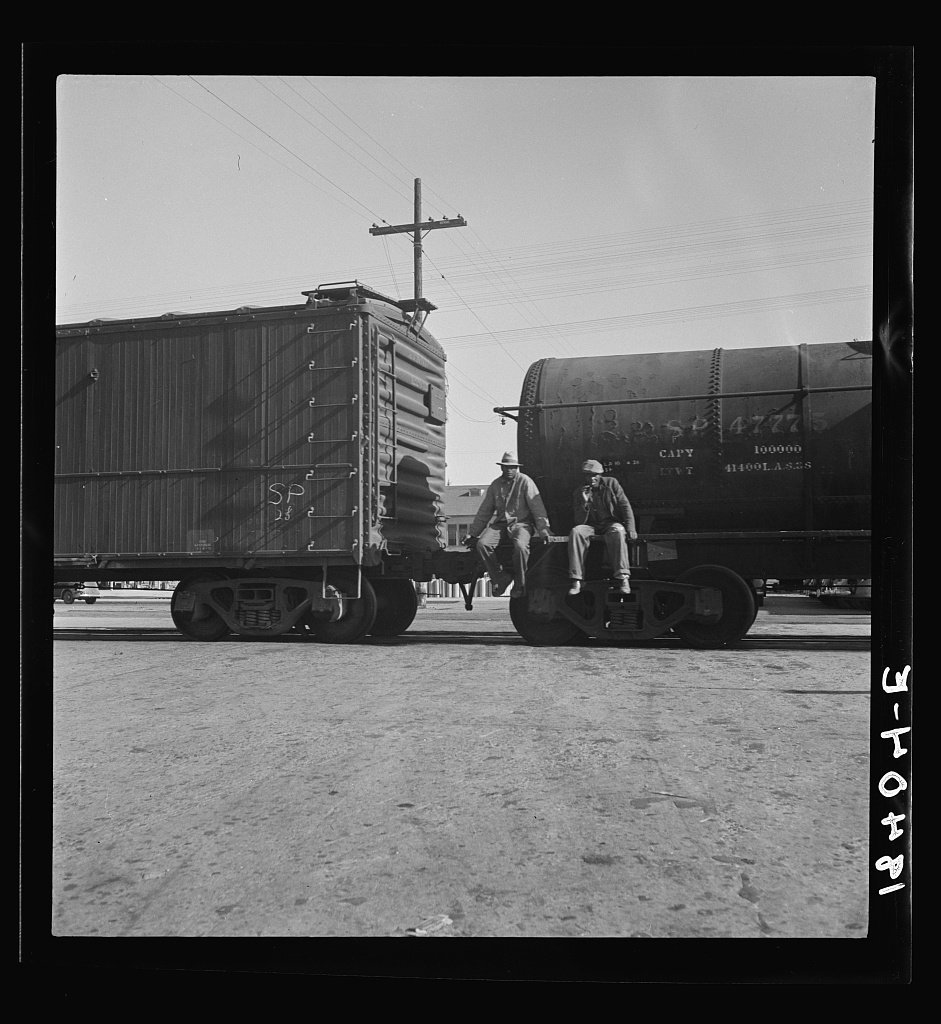
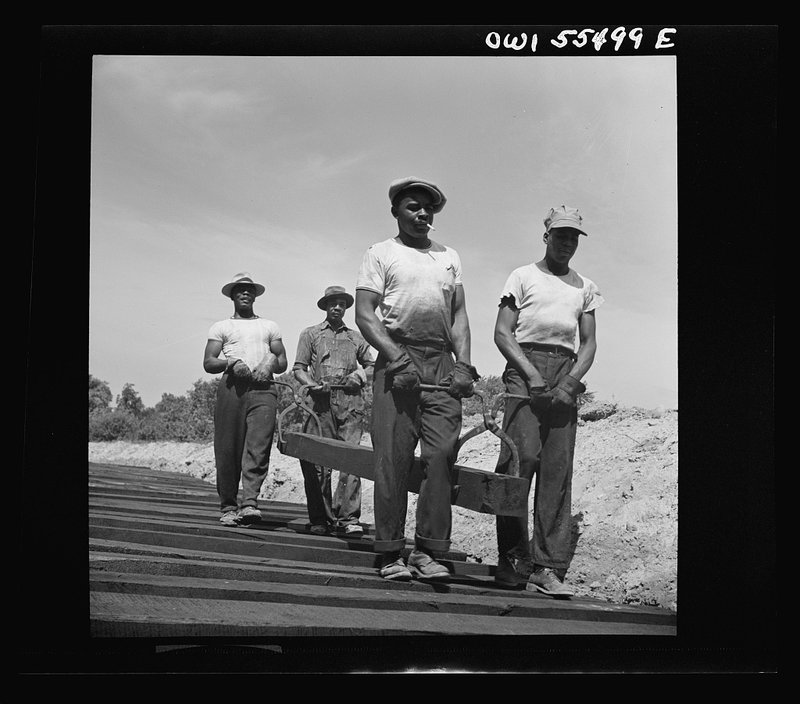
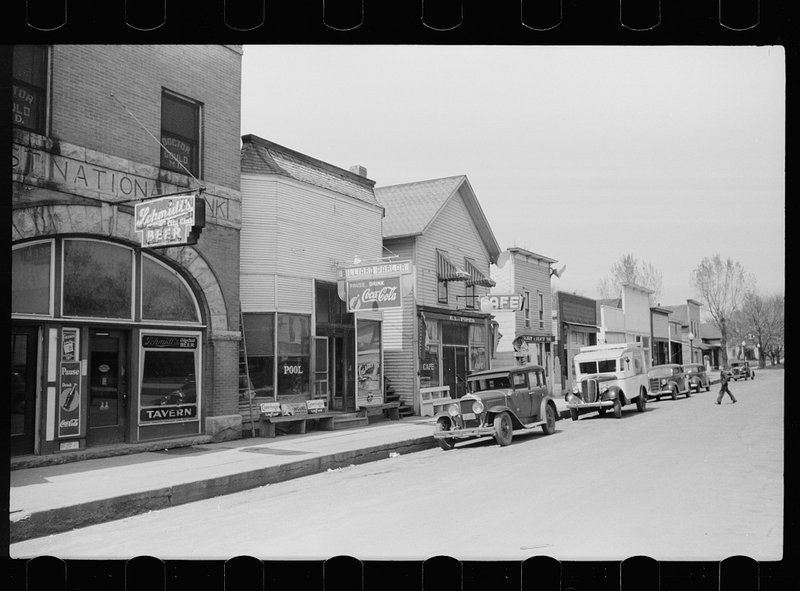
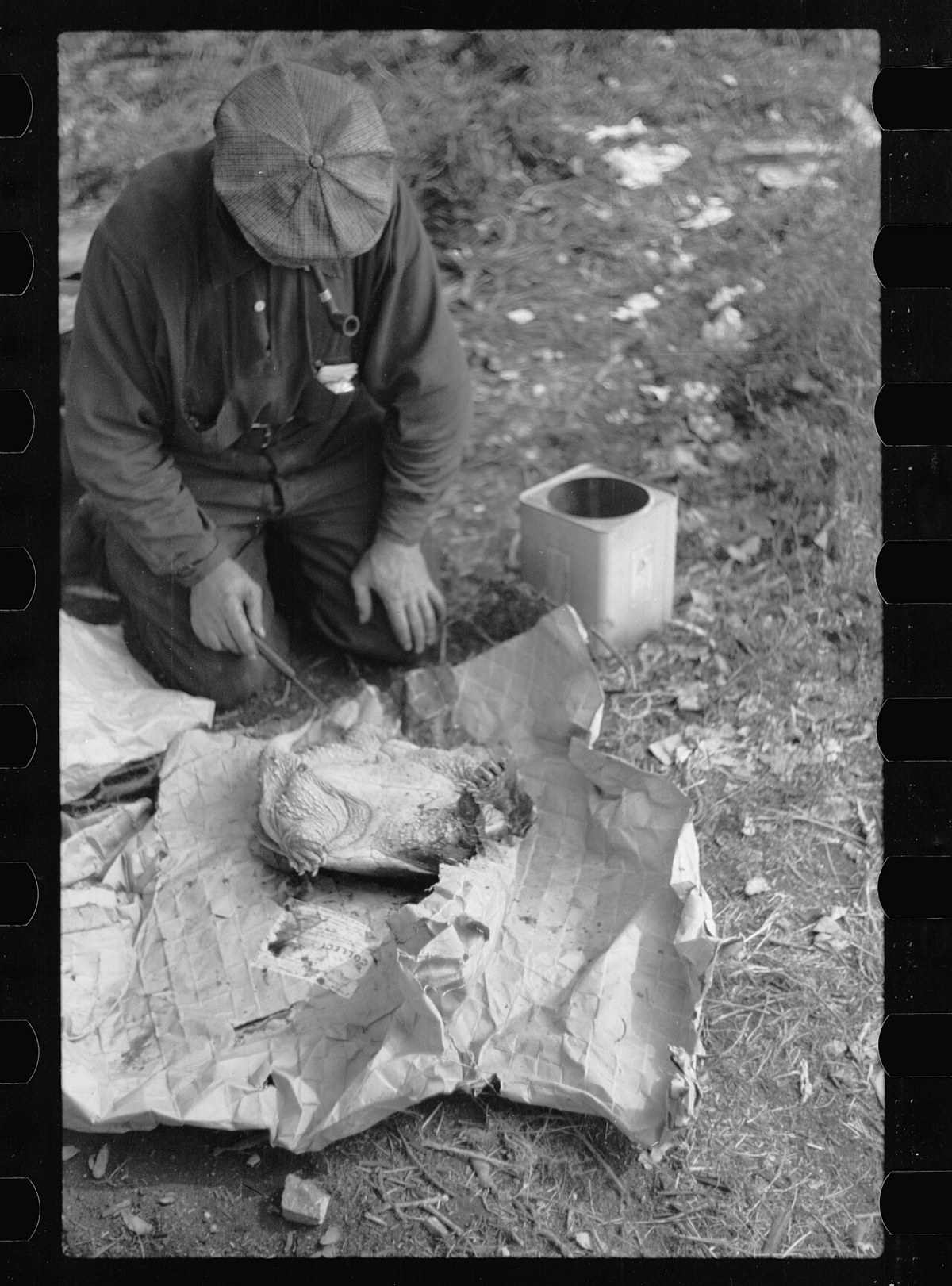
FSA photographers did not invent Black freighthopping, but they refused to leave it invisible. Lange’s Kingsbury tank-car riders, Vachon’s Dubuque yard frame, and Liberman’s 1942 OWI plate of Black laborers laying ties put Black mobility and rail labor on the contact sheet. Minneapolis jungle cooking scenes show hard-times camps far from southern posse culture.
Memoirs that center white “knights of the road” still dominate popular hobo imagery: steam, stew, brotherhood, the ethical code at Britt. That heritage is real—and incomplete. Scottsboro began on a freight; Birmingham’s vagrancy raids were labor policy; Lange’s tank-car riders belong beside the convention’s mulligan. The distinctions triad was always raced in practice: who counted as a “worker traveler” depended on whose employment a sheriff would vouch for. Music kept the whistle; Then and now must keep the trespass warning without erasing who paid the highest price for moving.
The next room stays with youth on freights, but widens the lens: the Depression-era teenagers—boxcar boys and boxcar girls—who left home by the hundreds of thousands.
See Sources for works and archives cited in this room.