
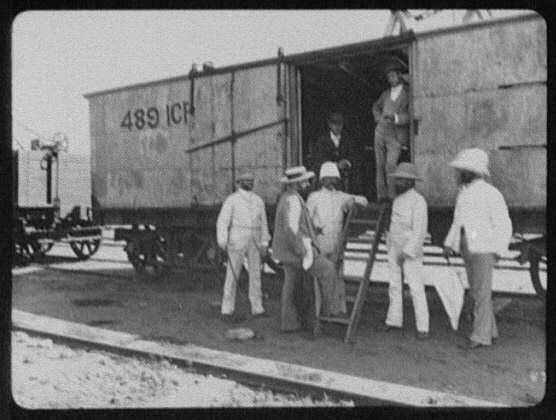
1908: Wobblies in overalls hop freights from Portland toward Chicago—a “Red Special” without a private car, selling songbooks and holding meetings between divisions.
Craft unions often ignored the seasonal and migratory worker. The Industrial Workers of the World, founded in Chicago in 1905, claimed him. Freights carried organizers to free-speech fights and harvest belts; after 1915, boxcars themselves became recruiting rooms. This chapter follows the Wobbly rail strategy from the Overalls Brigade through Bisbee’s cattle cars—and asks how that radical working-man ideal sat beside Hobo College and the road’s ethical self-image.
Chicago, 1905: One Big Union for Migratory Labor
The IWW’s founding convention met in Chicago in June 1905 with radical socialists, industrial unionists, and Western Federation of Miners veterans among the delegates. Melvyn Dubofsky and later syntheses stress what mattered on the rails: the AFL’s craft structure left unskilled and semi-skilled migratory workers—harvest hands, lumberjacks, miners, construction stiffs—outside stable locals. The IWW offered industrial unionism, relatively low dues, and an explicit welcome to immigrants, women, and workers of color. In the West the union’s self-image fused with the hobo: Solidarity once called the “nomadic worker” an exemplar of revolutionary unionism—branding as much as demography, and a reason freights fill Wobbly newspapers. Where Work circuits maps seasonal wages, the IWW tried to turn those circuits into leverage; where Ethical code framed the hobo as a decent working traveler, Wobblies framed him as a class actor who should carry a red card.
Overalls Brigade and Free-Speech Freights
In autumn 1908 a Portland group jokingly called the IWW “Red Special” Overalls Brigade hopped east toward the Chicago convention—twenty men in matching overalls, holding meetings and selling literature between divisions. J. H. Walsh’s reports in the Industrial Union Bulletin, reconstructed by the University of Washington IWW History Project, describe brakemen confrontations, a night in jail, and still arriving in time. Freights were propaganda logistics for workers who could not rent a Pullman.
Free-speech fights made that logistics mass politics. Spokane, 1909: after James P. Thompson’s arrest under a street-speaking ban, the Industrial Worker called members to “fill the jails”; hundreds came, many by freight, including Elizabeth Gurley Flynn; the ordinance fell. Fresno followed; Seattle and Portland Wobblies rode south, stalled near Ashland, and hiked through snow when trains would not run. San Diego, 1912: Local 13 urged comrades to “Come on the cushions / Ride up on top; / Stick to the brakebeams”—the paper’s first explicit hop-to-the-fight invitation. About 140 Los Angeles Wobblies arrived on a freight into vigilante beatings and a forced march to the county line; without a continuing flood of riders, the fight ended in defeat. Roger Baldwin later credited IWW free-speech fights with blazing a trail for working-class speech—praise that, the UW essay notes, hinged on whether bodies could reach town by rail.

The Red Card and the Boxcar
After 1915 the freight was not only a way to arrive—it was a workplace for organizers. A.W.O. field delegates signed men up between divisions, collected dues, and treated the moving car as a hall police could not easily raid. Solidarity letters boast that many crews left “red card men” alone; other stories describe Wobblies refusing brakemen’s shakedowns. Organizers also tried to keep non-members off harvest-bound cars—job control by controlling the ride. Secretary W. T. Nef wrote of members demanding to see cards so “closed shop” might reach the fields. Delegate Harry Howard’s 1916 letter notes that riders “took charge of the train and ditched all unorganized men” north of Fargo—printed under a headline about injustice to IWW members, implying editorial tolerance.
How widespread forced carding was remains contested. 1922 affidavits gathered by a U.S. marshal in western Washington claim riders were made to take cards or be dumped in desolate country; those statements come from peak repression and are adversarial evidence. The UW boxcar essay treats them as rare testimony, not a census: strategy is verified in IWW sources; scale and coercion are debated.
Agricultural Workers’ Organization and the Wheat Belt
The 1915 harvest conference in Kansas City launched the Agricultural Workers’ Organization (A.W.O. Local 400) to organize migratory harvest hands from Texas north into the Dakotas. Initiation was two dollars—steep relative to other branches, roughly a day’s wage—perhaps to offset irregular dues. The IWW flooded the belt with free Solidarity copies. Delegates worked jungles, jobs, and freights. Forrest Edwards’s “800-mile picket line” named the geography: control who rode into the fields, and you pressured “John Farmer” on wages, hours, and board. Early reports claimed many members at $3.50 a day against a $2.00–$2.50 common rate—period claims, not audited payrolls. Membership figures are inflated by both union and police; clearer is money: Greg Hall notes the agricultural branch contributed over half of IWW finances from 1915 into the mid-1920s. Decline followed the automobile; by the late 1920s most wheat-belt itinerants arrived by car, and train-centered recruitment failed to capture “autotramps.”
Songbook, Joe Hill, and the Sound of the Cars
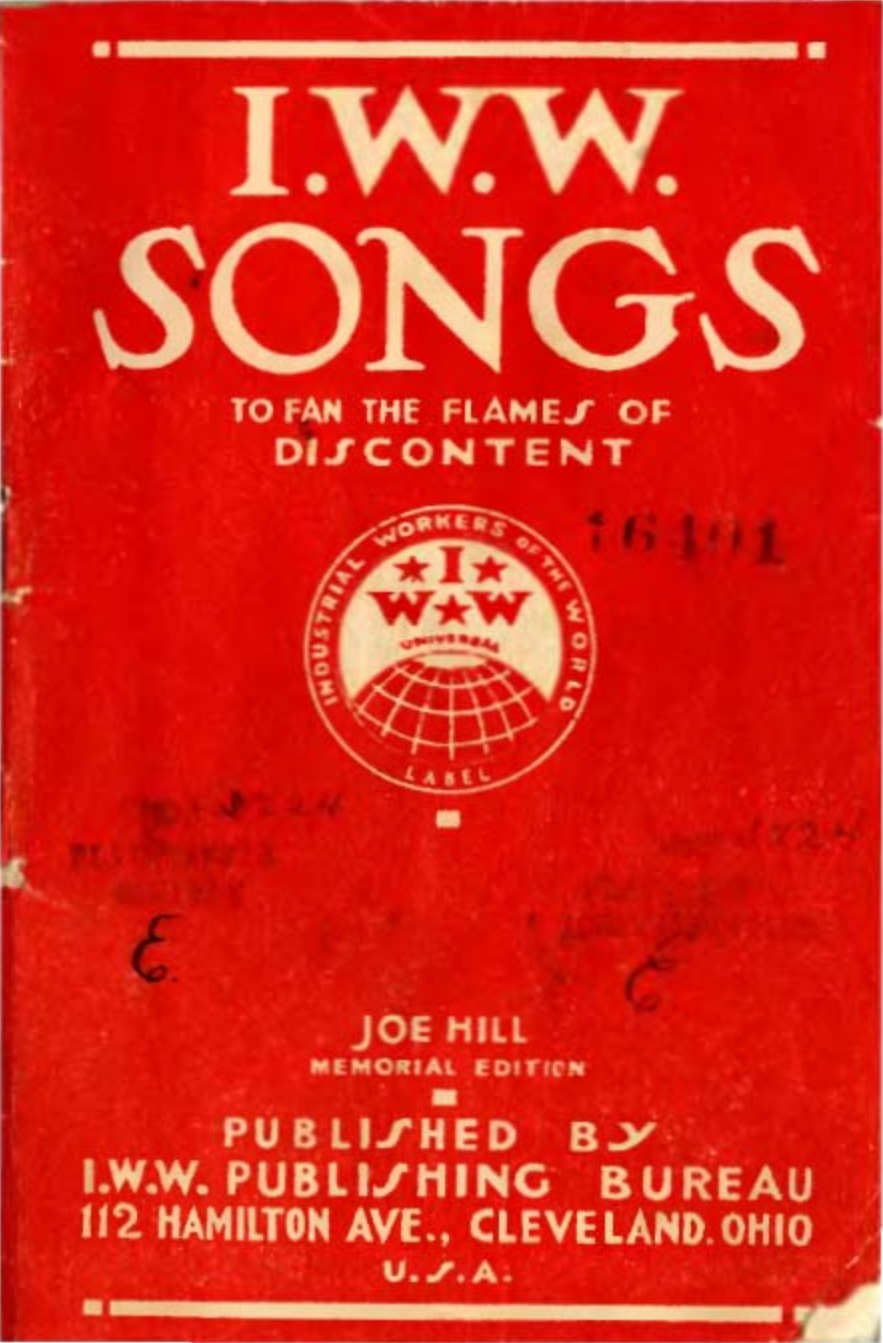
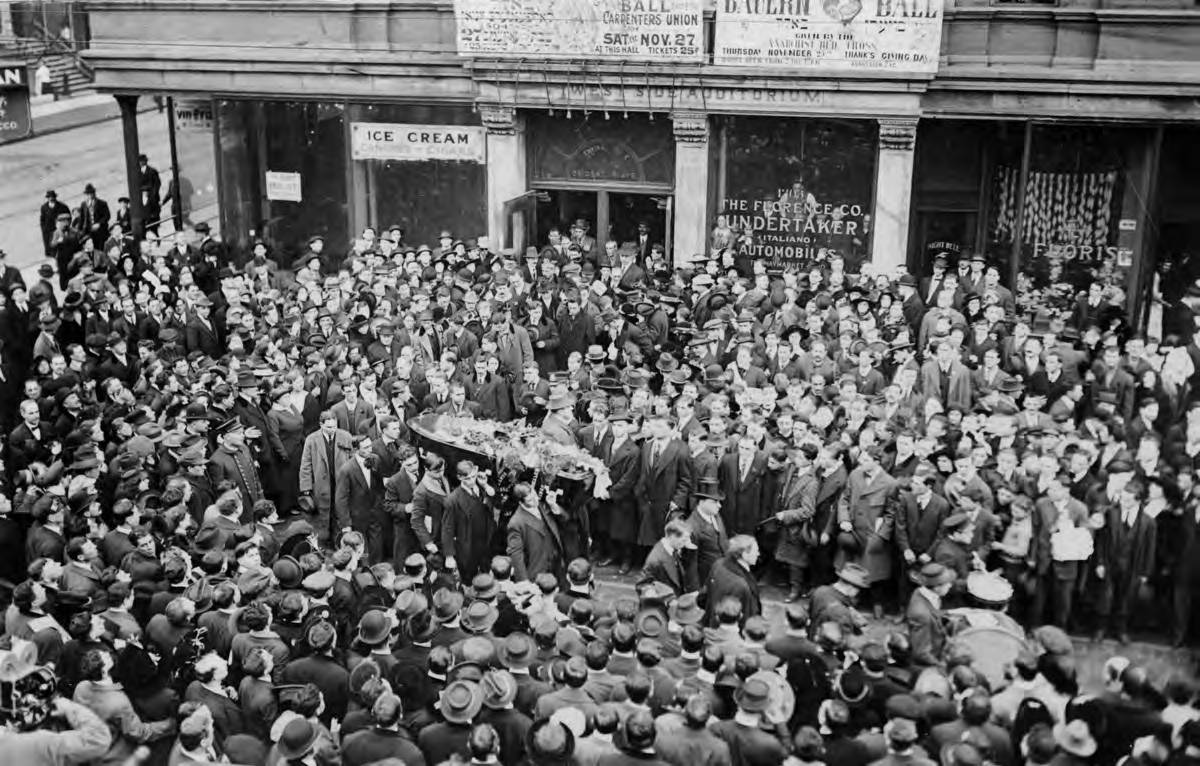
Organizing needed shared lyrics. The Little Red Songbook—“Songs to Fan the Flames of Discontent”—traveled in pockets and jungles. Joe Hill’s execution in Utah on November 19, 1915, made him the movement’s martyr; “The Preacher and the Slave” and its “pie in the sky” refrain mocked salvation postponed while bosses took the present. This museum’s Music and literature room carries the songbook objects, the attribution warnings (Hill did not write “Hallelujah, I’m a Bum”), and the funeral’s visual afterlife—follow that link rather than reprinting the shelf here. On the freights, the point was practical: a tune everyone knew turned a car into a meeting.

Violence, Deportation, and Wartime Raids
Farm and timber bosses answered with guns and law. At Ralph Durst’s hop ranch in Wheatland, California, on August 3, 1913, a strike meeting over pay, water, and toilets ended in gunfire that killed four; IWW-linked organizers Richard “Blackie” Ford and Herman Suhr drew long sentences—the Wheatland hop riot as an early California farm-labor flashpoint. On November 5, 1916, some three hundred Wobblies steamed from Seattle toward Everett on the Verona and Calista; waterfront gunfire left dead on both sides—the Everett Massacre.
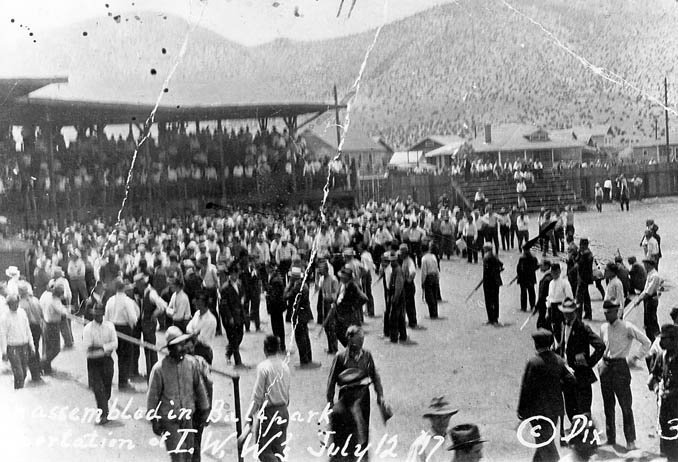
Bisbee, Arizona, July 12, 1917: during a copper strike, a citizens’ posse rounded up roughly a thousand suspected strikers and IWW sympathizers, marched them to Warren, and forced them into manure-fouled cattle and boxcars. The train was turned away from Columbus, New Mexico, and the men were abandoned at Hermanas. Armed guards rode the cars; roads back into Bisbee were sealed. It is the hobo museum’s darkest freight image—not riders choosing a car, but capital using the railroad as a weapon.

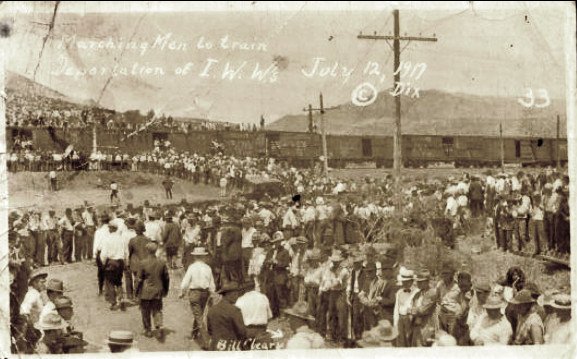

Wartime federal power finished what vigilantes began. The Espionage Act (1917) and state criminal-syndicalism statutes criminalized much of the IWW’s literature and speech. September 1917 raids hit halls nationwide; the 1918 Chicago trial (United States v. Haywood et al.) sent Bill Haywood and scores of defendants to long sentences. Songbooks became courtroom exhibits. By the early 1920s the open Wobbly presence on freights and street corners had been battered into fragments—even as A.W.O. remnants lingered a few more harvests.
Hobo College, Ethics, and What Remained
James Eads How’s International Brotherhood Welfare Association and Chicago Hobo College shared the migratory audience and sometimes the soapbox, but not the program. After 1917 especially, Hobo News and IBWA voices often distanced “respectable” hoboes from Wobbly sabotage scares—tension documented in college and How biographies. The hobo ethical code’s insistence on work, clean jungles, and respect for towns could sound like a rebuttal to newspaper cartoons of the bomb-throwing tramp; Wobblies heard in the same man a potential dues-payer on an 800-mile picket line. Both claimed the working traveler. Neither owned him.
What remains for this museum is the iron fact: freights made radical mobility possible, and the same freights became cages at Bisbee. Read the songbook in Music; read the college’s chalkboards next door; keep the red card’s double meaning—solidarity and coercion—on the table without romance.
Union halls and boxcars were one architecture of mutual aid. The next room opens another: Hobo College on Chicago’s main stem, where lectures and chalkboards met the migratory worker.
See Sources for works and archives cited in this room.