
At the edge of Perryton, Texas, an old professional migratory laborer makes camp as wheat harvest opens—bedroll, fire, and the rumor of wages a few miles up the road. Dorothea Lange’s camera finds him in 1938; his type had been riding seasons for decades.
Catching out was never an end in itself. For the self-called hobo, freights were the unpaid bus between wages. This chapter is about the trades that built the West and filled Midwestern seasons: wheat and threshing, timber, track, ice, fruit and hops, mines and dams—and the employment “sharks” who sold tickets into them. Frank Tobias Higbie’s Indispensable Outcasts (2003) and Todd DePastino’s Citizen Hobo (2003) place those seasonal workers at the center of Progressive Era labor, not at its romantic margin. Nels Anderson’s Chicago fieldwork named the main stem as their labor market. The map below is approximate. Seasons and routes varied; the pattern held.

Wheat, Harvest Stiffs, and the Road to Canada
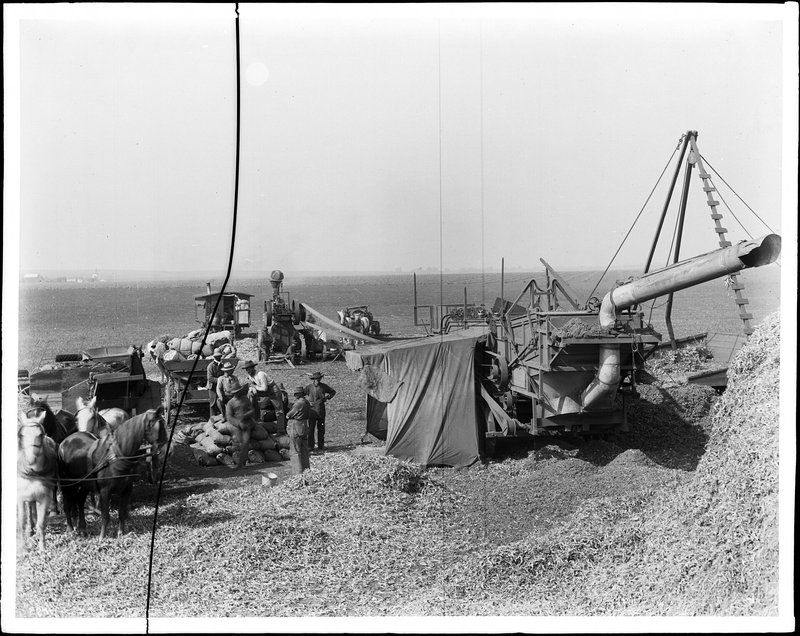
Before the combine dominated the Plains, wheat needed armies for a few weeks and almost no one the rest of the year. “Harvest stiffs” followed the ripening belt north: Texas and Oklahoma in late spring, Kansas and Nebraska through midsummer, the Dakotas by August, and often on into the Canadian prairies. Not every man rode the whole corridor; many worked a stretch and shipped again. The IWW’s Agricultural Workers’ Organization treated the U.S. wheat belt as an “800-mile picket line” (see The IWW and the rails). Secondary estimates of annual hands run from roughly 100,000 into the low hundreds of thousands at peak—order-of-magnitude figures, not a census.
Canada had its own organized pull. From about 1890 to 1930, Canadian Pacific and other railways ran harvest excursions: cheap special trains that carried workers west from eastern Canada, the Maritimes, Britain, and sometimes the United States. The Canadian Encyclopedia notes fares on the order of fifteen dollars to Winnipeg in the early decades, crude coaches packed four to a compartment, and wages commonly cited around $1.75–$2.25 for a ten- to twelve-hour day with board for harvesting, higher for threshing crews—local and temporary, but enough to draw tens of thousands in good years (about 14,000 excursionists in 1908 by that encyclopedia’s count). Excursions and freighthopping overlapped at the border: U.S. harvest stiffs and Canadian excursionists met the same prairie clocks until the wheat economy’s collapse and new machines ended the era around 1930.
Threshing Crews
Cutting was only half the job. Threshing outfits—steam engines, separators, spike pitchers, bundle wagons, water monkeys—moved farm to farm after the headers and binders. A crew of two dozen or more ate at the farmer’s table or from a cook-car, slept in barns or straw, and chased the same northbound calendar. Pay for threshing hands often ran higher than field cutting in Canadian and Plains period reports (on the order of two to three dollars a day with board in early-twentieth-century Canadian figures). When the last stack was cleaned, the outfit broke up and men hit the freights or the next county’s rumors.
Timber Beasts and the Bunkhouse
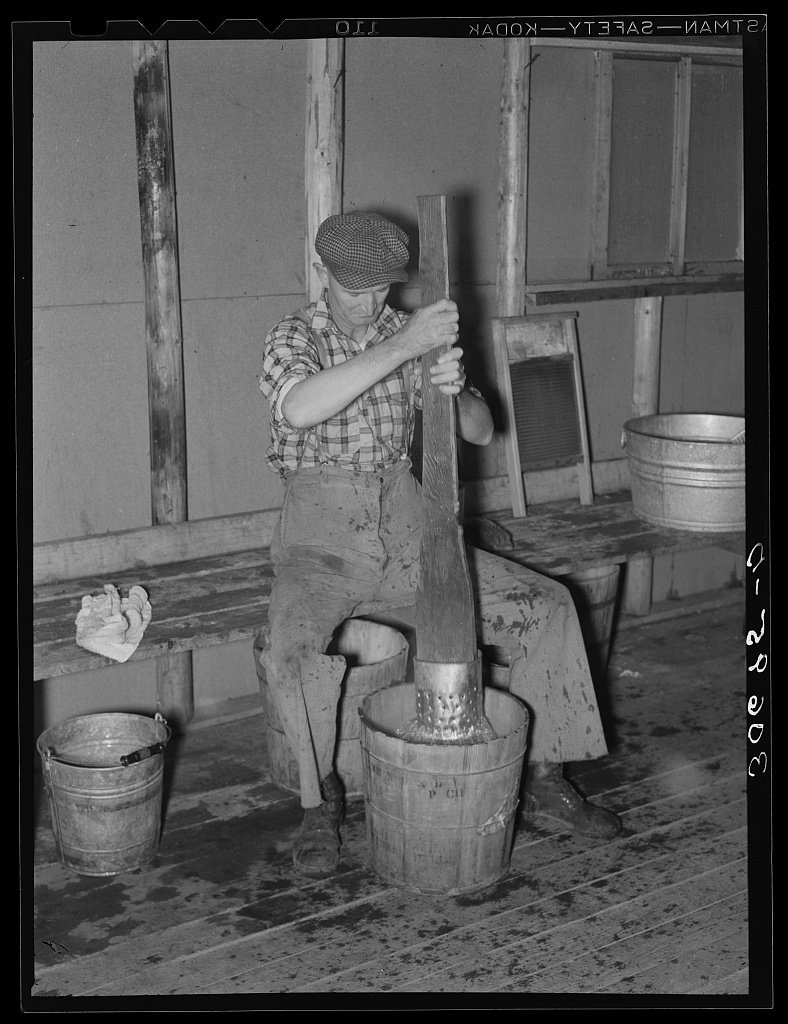
Logging camps in the Pacific Northwest and the Great Lakes states pulled “timber beasts” on short contracts timed to snow, river drives, and mill demand. Anderson’s informants moved between northern woods in winter and harvest or mines in summer—the classic double season. Camps meant bunkhouses: crowded bunks, wet wool, company cooks, and isolation that made a jungle near a rail spur feel like town. Wobblies organized lumber as fiercely as wheat; bosses answered with blacklists and deputies. When the cut ended, the same freights that brought men in carried them out toward the next rumor of wages.
Gandy Dancers and Extra Gangs
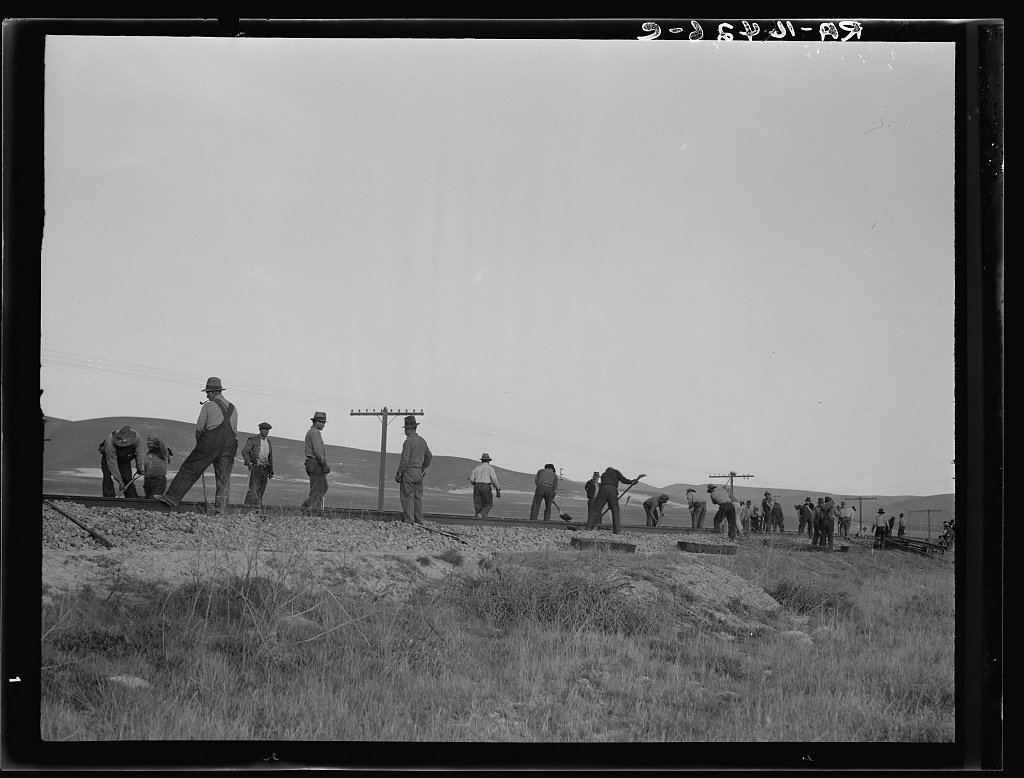
Railroads employed the men who kept railroads running. Section gangs—sometimes called gandy dancers for the coordinated lift-and-tamp of track work—maintained ties, ballast, and rails year-round. Extra gangs surged for construction, washouts, and big renewals. Lange photographed a white section gang near King City, California, noting that before the Depression the work had been done entirely by Mexican labor—a reminder that race and immigration shaped who got which jobs. Bridge gangs, graders, and levee crews belonged to the same migratory construction world that Anderson watched crowding gondolas when Montana grades shut down for winter.
Ice Harvesting
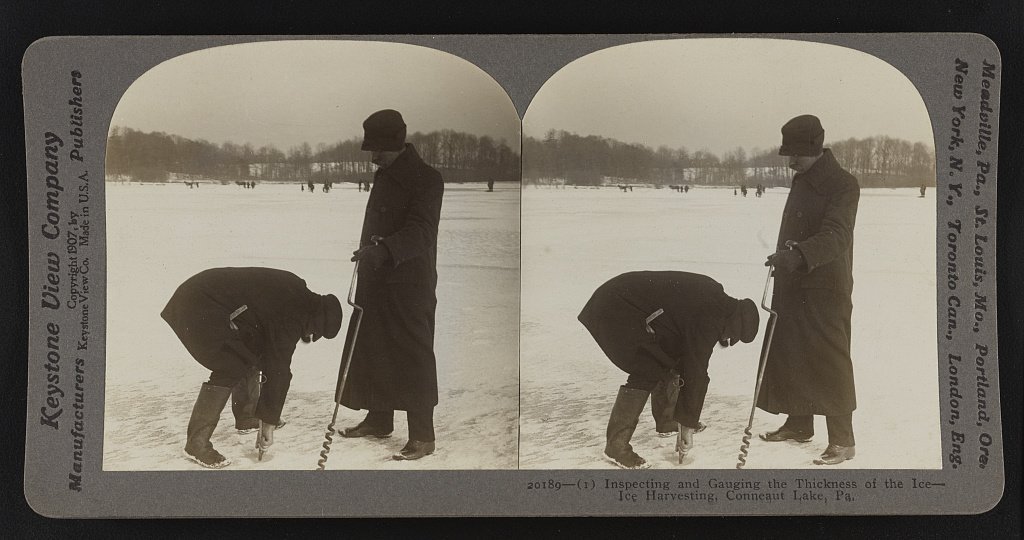
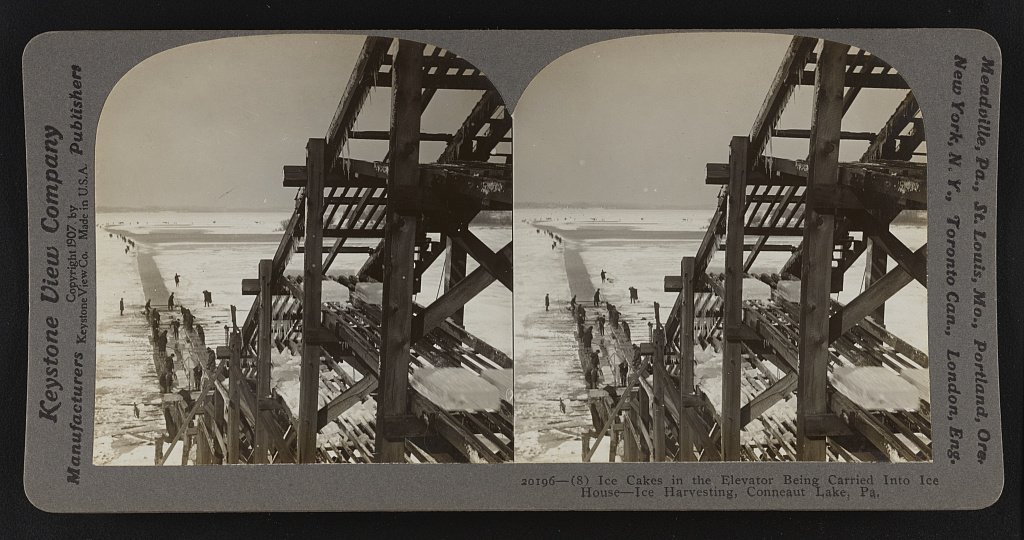
Before mechanical refrigeration blanketed American cities, winter lakes and rivers were a crop. Crews scored, cut, floated, and elevated ice cakes into icehouses for summer delivery. Hard winters meant wages; warm winters meant empty pockets and earlier returns to the stem. Ice sat on the same migratory calendar as wheat and timber—another reason a professional rider timed the year like a timetable.
Fruit, Hops, Mines, and Dams
California valleys (Imperial, San Joaquin, Salinas), Yakima hops and apples, and Pacific berry belts staggered harvests so hands could move crop to crop. Hop yards mixed local families with migrants; Ralph Durst’s Wheatland ranch in California became a flashpoint on August 3, 1913, when a strike meeting over pay, water, and toilets ended in gunfire—the Wheatland hop riot treated fully in The IWW and the rails. Mining camps and construction—dams, levees, canal grades—pulled men who would rather “ship” far than take a local day job. Anderson called Chicago’s West Madison the “slave market” because distant jobs with a ride thrown in outsold steady work nearby.
Map labeled approximate. Scholarship: Higbie, Indispensable Outcasts; Hall, Harvest Wobblies; UW IWW History Project; Canadian harvest-excursion summaries.
Employment Sharks on the Main Stem
Urban stems sold the circuit. Anderson’s “man catchers” chalked distant jobs on windows; men bargained to “ship” somewhere with a long ride thrown in. Fees, padrones, and crooked tickets were legendary for reason: agencies could charge for jobs that vanished on arrival, underpay, or split fees with foremen who “needed” replacements. Free municipal employment offices never fully displaced the private shark. The paper slip—destination, crop, sometimes a fee—was how a man proved he was “going to work” when a marshal asked (see Hobo, tramp, and bum). Higbie’s Midwest communities lived with that seasonal influx: towns needed the hands and feared the jungles.
Wages, Seasonality, and the End of the Circuit
Dollar figures were always local and temporary. Canadian excursion summaries and Plains reporting cluster harvest day wages in the low dollars with board for ten- to twelve-hour days; threshing paid more; a bad year or a crooked ticket wiped a stake overnight. The point of the calendar was not a national average—it was knowing when ice, wheat, hops, and timber opened and closed. Between jobs, pocket crafts (nickel carving, tramp-art woodwork, umbrella repair) stretched thin stakes—see Art and trade.
Mechanization ended the classic circuit. Combines cut the need for header and binder armies; trucks and tractors moved grain and men without boxcars; mechanical refrigeration killed the ice harvest; diesel freights and sealed cars made the unpaid bus harder and more illegal. By the late 1920s automobiles already carried many wheat itinerants. The fuller safety and decline story—and why freighthopping today is not this labor market—belongs in Then and now.
Without these trades, the road collapses into a cartoon of pure wandering. That closes The Road wing. The next corridor turns from routes and wages to the people who rode them—notable figures, women on the rails, Black travelers under Jim Crow, and the boxcar kids.
See Sources for works and archives cited in this room.