
A freight pulls in. The crew stares. Ethel Lynn, publishing in 1917, writes herself into a literature that usually erased women from the open car—except as joke or moral panic.
The previous room ended on notable names. This chapter turns to women inside the anonymous majority. They rode for work, health, love, and survival; they dressed as men; they risked violence and morals arrests; they cooked in jungles and slept in missions; and a few were later crowned at Britt. The archive is thinner than the men’s. What survives must be read carefully—and never mistaken for a census of one “Box-Car Bertha.”
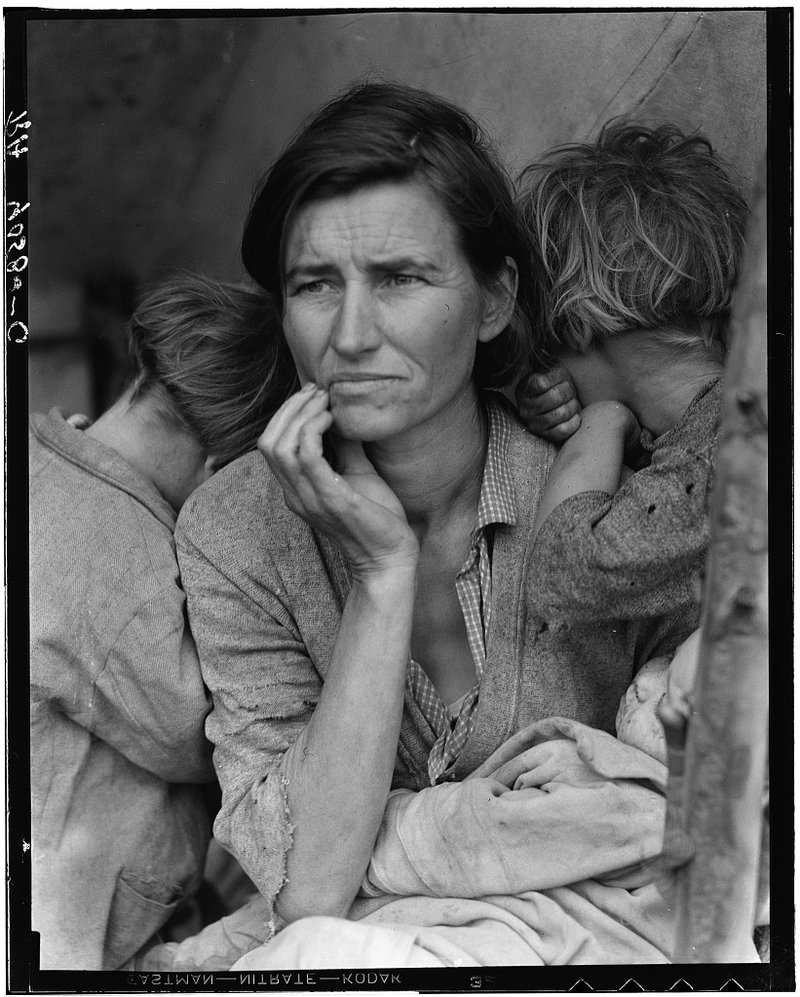
Why Women Disappear from the Picture
Police blotters, brakemen’s gossip, and many jungles assumed a male road. A woman traveler risked sexual violence, arrest under vagrancy and morals statutes, disbelief when she claimed work, and “rescue” that meant being shipped home. Social agencies routinely returned stranded women and girls to families they had fled; Joan M. Crouse and later scholars note that relief counts therefore understate female transiency—women avoided the desks that would erase their escape. Photographers, too, framed women more often as mothers in roadside camps than as solo freighthoppers, shaping what later viewers think was possible.
Disguise was survival. Thomas Minehan, riding Midwestern freights undercover in 1933–34 for Boy and Girl Tramps of America (1934), estimated that about ten percent of the young people he met were girls, “dressed in overalls or army breeches and boys’ coats.” Errol Lincoln Uys, synthesizing Depression rail youth for Riding the Rails, likewise notes girls passing unrecognized in male garb and stresses that they rarely hit the road lightly. Male clothing lowered the odds of being singled out in a yard; it did not erase danger once a voice or a search betrayed the disguise.
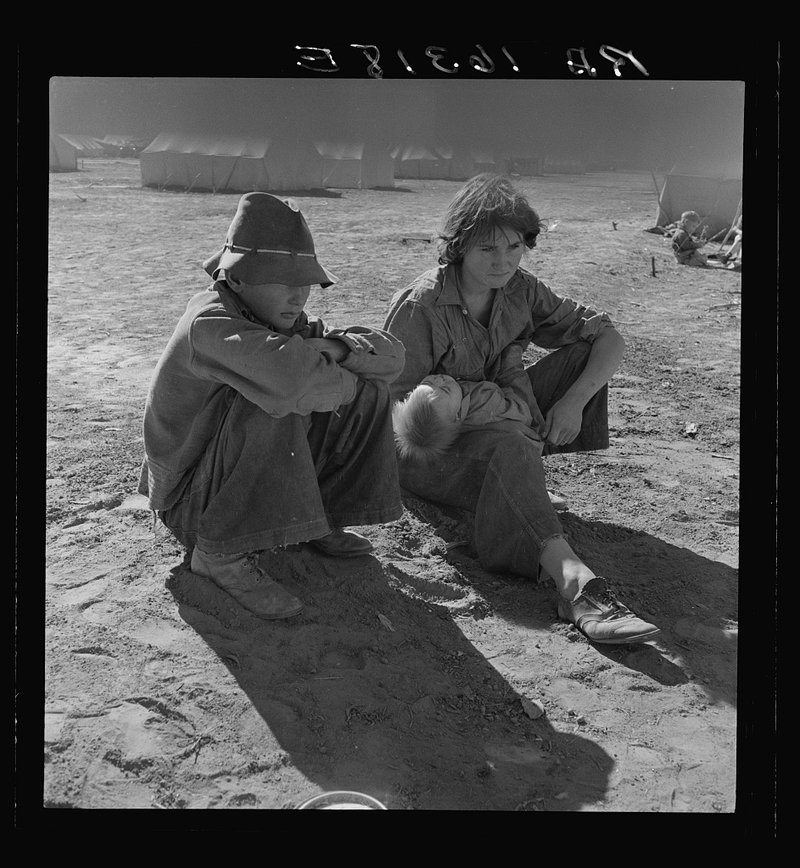
Depression Estimates: Girls on Freights
By summer 1932 the “roving boy” was a fixture of American headlines; the occasional girl was sighted too. Minehan’s book remains the fullest near-contemporary ethnography of those youth. He collected some five hundred life histories among several thousand transients and wrote of grinding poverty, broken schools, and parents who sometimes blessed a child’s departure because there was no food left. After months on the road, romance hardened into a hunt for bread. Girls traveled in pairs, sometimes with a boyfriend, sometimes with a “tribe” of boys. Minehan’s portrait of fifteen-year-old “Kay”—undernourished, nail-bitten, skin not yet toughened by cinders—stands for many who never published a memoir.
Uys’s later narrative history and the PBS-linked Riding the Rails project keep those estimates in public view while stressing race as well as gender: Black youth faced the same freights plus Jim Crow towns (see Black travelers & Jim Crow). Pair this room with The boxcar kids and The Great Depression: the numbers are contested and partial, but the presence of girls is not a legend.
Ethel Lynn’s Public-Domain Memoir
Before the Depression’s flood of youth, Ethel Lynn published The Adventures of a Woman Hobo (George H. Doran, 1917)—now public domain in the U.S. (Project Gutenberg #62971). She recounts tandem-bicycle and rail-adjacent travel, encounters with train crews, and the shock of being seen as a “lady tramp.” Read episodes as her narrative, not as every scene independently corroborated. Because the book is PD, this museum can quote and link it freely—a rarity for women’s road narrative, and a reason the Reading room keeps it stocked.
Barbara Starke—and What We Leave Out
Barbara Starke (pseudonym of Helen L. Card) published Born in Captivity: The Story of a Girl’s Escape (1931; English edition titled Touch and Go). Inspired by David Grayson’s walking essays, she left home around age eighteen and crossed much of the country largely on foot and by accepted rides rather than by freighthopping as her primary mode. Scholars of women’s road autobiography (including work comparing Starke, Lynn, and “Box-Car Bertha”) treat the book as a constructed escape narrative: useful evidence that young women claimed the road in print, not a boxcar how-to. Claims for other titles sometimes floated in popular lists—“Touch Bottom,” a “Peggy de Hamer” hobo memoir—do not hold up as verified freighthopping autobiographies in the sources this museum checked, so they are omitted here.
Box-Car Bertha Is Not a Documentary Life
Ben Reitman’s 1937 Sister of the Road: The Autobiography of Box-Car Bertha (as told to / produced by Reitman) is a composite. It is useful as pulp and as a clue that women were present in jungles, missions, and sex work’s overlapping economies; it is useless as a single clean biography. Keep Reitman’s real Hobo College work separate from this literary project. The Moniker wall already flags Boxcar Bertha as culture, not census—do not promote the name into a verified rider list. Lynn = authored memoir (read critically). Starke = authored escape narrative (mostly road and ride, not freights). Bertha = composite fiction framed as life story.
Jungles, Missions, and Family Freights
Women appear in the archive as jungle cooks and mission clients as well as riders. Camps mixed familial groups with solo travelers; Lange’s Yakima Valley freight-family series (see the boxcar-kids room) shows women and children inside migratory poverty, not outside history. Missions and transient bureaus offered beds with strings attached—moral supervision, family reunification, the end of the road by policy. The ethical code’s clauses about helping runaways and protecting children (Ethical code) admit, by their existence, that girls were on freights and that predators were not imaginary.
Britt’s Queens: Living Names
At Britt the female road is not only a Depression footnote. The National Hobo Convention still elects a Hobo Queen by speech and applause—ritual titles that honor memory-keepers as much as mileage (see Tourist Union No. 63). Minneapolis Jewel (Julianna Porrazzo-Ray) was elected queen five times (1986, 1991, 1997, 2011, and 2017); in 2017 she and her husband Tuck were named queen and king together. Connecticut Shorty (Betty Moylan), daughter of Connecticut Slim, was crowned Hobo Queen in 1992 and remains a public voice for preservation, museum work, and oral history alongside her sister New York Maggie (UI Hobo Archive). Their monikers are how Britt knows them—living proof that women’s names belong on the same wall as Steam Train Maury’s.
Against the Lone-Male Postcard
Romantic hobo imagery still prefers a lone man, a mulligan pot, and a western sunset. That image sells. It also lies by omission. Women rode, walked, cooked, hid in overalls, raised children in squatter camps, published memoirs, inspired composites, and now wear Britt’s coffee-can crowns. The hobo / tramp / bum triad was gendered in practice: who counted as a “worker traveler” depended on whose body a sheriff or a mission matron believed. Pair this room with Depression freights, boxcar kids, Black travelers, music’s road songs, and Then and now—and refuse to let “hobo history” mean only men.
The next room follows another erased majority: Black travelers whose mobility the South’s vagrancy regime treated as a crime, and the freight that opened the Scottsboro case.
See Sources for works and archives cited in this room.