
The same grab iron that meant a season’s wages in 1915 can mean amputation or a trespass arrest in 2026. History without a warning becomes an advertisement.
Britt keeps memory under a roof. This last room keeps it honest. The museum documents a culture; it does not teach anyone to board trains. Then was deadly. Now remains illegal and deadly. If the tour ends only in wanting to “ride the rails like the old days,” the walk has failed.
Then: Deadly Even When Work Paid
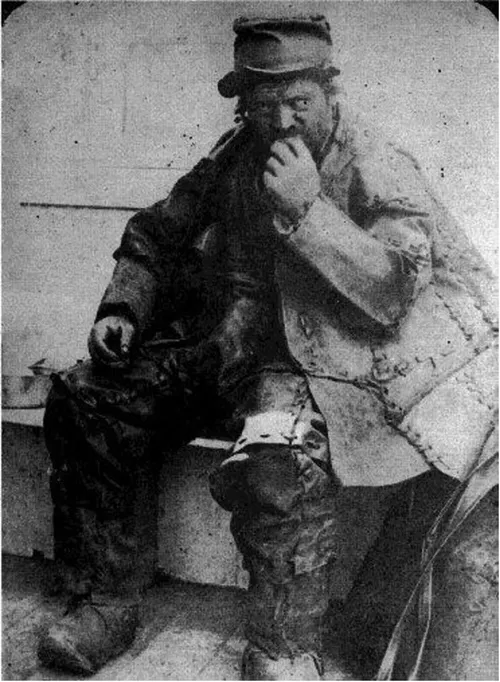
Before diesel and containers, freights still killed. Riders lost limbs and lives to wheels, weather, jack-rollers, and falls. W. H. Davies’s amputation, Jack London’s near-misses on the blinds and rods, and period claim-agent tallies all say the same thing: freights were workplaces without safeguards for trespassers. Conductors forced men off; special agents and Pinkerton-era bulls cleared yards. The Life on the rails and Ethical code rooms already named that violence. Even when a harvest paid, the ride to it was unpaid risk. The warning is as old as the road—not a modern invention of lawyers or a spoilsport footnote.
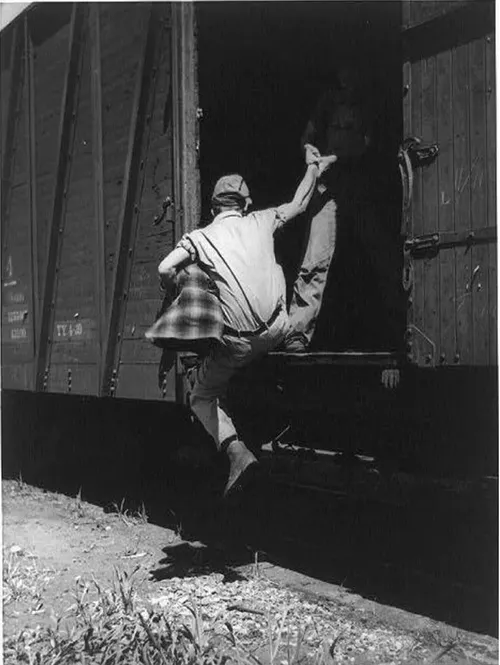
Period photographs of men under cars or flipping moving freights look like adventure until you count the survivors who wrote with one leg. This museum shows those images as evidence of cost. It will not caption them as invitation.
After the War: The Work Circuit Broke
The classic hobo—a migratory worker riding freights between seasonal jobs—depended on a labor market and a railroad that both changed. Mechanized harvests shortened peak labor and cut the number of hands needed on the plains and in orchards; the Work circuits that once pulled thousands west faded. Western railroads stopped treating surplus harvest hands as free ballast. Automobiles and trucks gave itinerant families new flexibility; returning veterans and a denser settled population filled jobs local workers could take. Diesel locomotives, spreading widely by the 1950s, erased the frequent water-tank stops where jungles had clustered and trains had slowed. Longer, faster freights with fewer stops made boarding harder. Sealed, locked, refrigerated, and later intermodal container cars replaced the pry-open boxcar—some modern equipment nicknamed “suicide cars” by people who still try, a phrase that belongs in a warning, not a brochure.
By mid-century historians were already writing the old-style hobo laborer out of the working West—comparing him to the buffalo hunter and the stagecoach driver. The Depression’s blackened freights, walked in this museum’s Depression room, had been an aberration of mass unemployment, not a permanent return of Tourist Union No. 63’s world. After World War II, prosperity and technology closed the gap the bindle stiff once filled. Steam became nostalgia; the job that had justified the risk evaporated.
Later Riders Are Not the Same Culture
People still appear on freights. That fact does not make them hobos in the museum’s sense. In the 1980s a loosely knit group calling itself the Freight Train Riders of America (FTRA) drew press and police attention—sometimes described as mutual-aid riders on northern routes such as the BNSF Hi-Line, sometimes linked in reporting to violence and white-power factions. Treat sensational tallies and “brotherhood” myths carefully; founding stories (Montana bar, Vietnam veterans) circulate without a clean primary archive. What is solid is that late-century freight subcultures were not the harvest-circuit labor force of 1910. The 1990s brought “crust” punks and traveler kids—countercultural hoppers documented in magazines such as Esquire—whose ethics were dumpster and squat more than wheat and timber wages. Rubber tramps (cars, vans, RVs), already named in Britt fieldwork and Smithsonian reporting, and later “workampers” chasing gig and seasonal park jobs, move mostly on highways. This museum’s Britt rooms already separate heritage families and rubber-tramp elders from a cartoon bindle. Do not collapse them into one romance—or into a recruiting poster.
Illegal—and Statistically Deadly
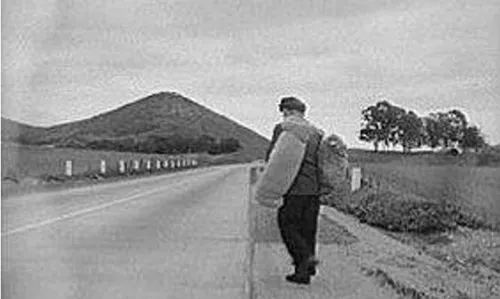
Railroad rights-of-way are private property. Unauthorized presence—walking the tracks, loitering in a yard, boarding equipment—is trespass under state and local law. Congress has directed FRA outreach on the illegality and dangers of trespass; model state penalties target both trespass and vandalism on railroad property. The Federal Railroad Administration states plainly that it is illegal to access private railroad property anywhere other than a designated pedestrian or roadway crossing, and that trespassing is the leading cause of rail-related deaths in the United States, with more than five hundred trespass fatalities nationally in a typical year. Operation Lifesaver and FRA trend tools update annual casualty counts; the order of magnitude holds.
FRA’s 2018 national strategy and later Volpe analyses of fatal trespasser strikes (including both suicides and non-suicides on the right-of-way) describe a general public-safety crisis—shortcuts, recreation, intoxication, despair—not a census of hobos. Do not cite those numbers as “how many hobos die hopping.” Cite them as proof that railroad property kills unauthorized people at scale. Federal criminal statutes also cover entering trains to commit violence or wrecking trains; everyday unauthorized riding is enforced chiefly as trespass and as deadly physics. Trains at modern speeds can take more than a mile to stop; they overhang the rails by feet; they are quieter than folklore admits. Never walk under, around, or between cars—even when a train looks stopped. This museum will not list boarding methods, yard tips, or routes.
What Survives—and Why Remember
If the freights no longer carry a national harvest army, what is left? Britt still ladles mulligan and crowns kings and queens by moniker. The circulated ethical code still argues that work and mutual aid defined the road. Words—jungle, bull, catch out, bindle—still need a glossary so novels and films do not flatten them. Songs, nickels, and chalked names still teach looking. Hobo College’s chalkboards and the IWW’s freights remain architectures of self-respect. Remembering matters because the alternative is either amnesia or dangerous nostalgia: forgetting the working poor who built seasonal America, or mistaking their risk for a lifestyle brand.
Walk backward one last time. Open the Glossary of the road for the tongue. Open Origins for how rails plus wage hunger made a mobile class. Open Distinctions so hobo, tramp, and bum stay separate. Open Depression, Ethics, Monikers, and Britt so labor, aspiration, names, and living heritage share one museum. Then close the book here: the tour ends in understanding, not in a yard. Stay off the tracks. Stay curious in the archive.
See Sources for works and archives cited in this room.