
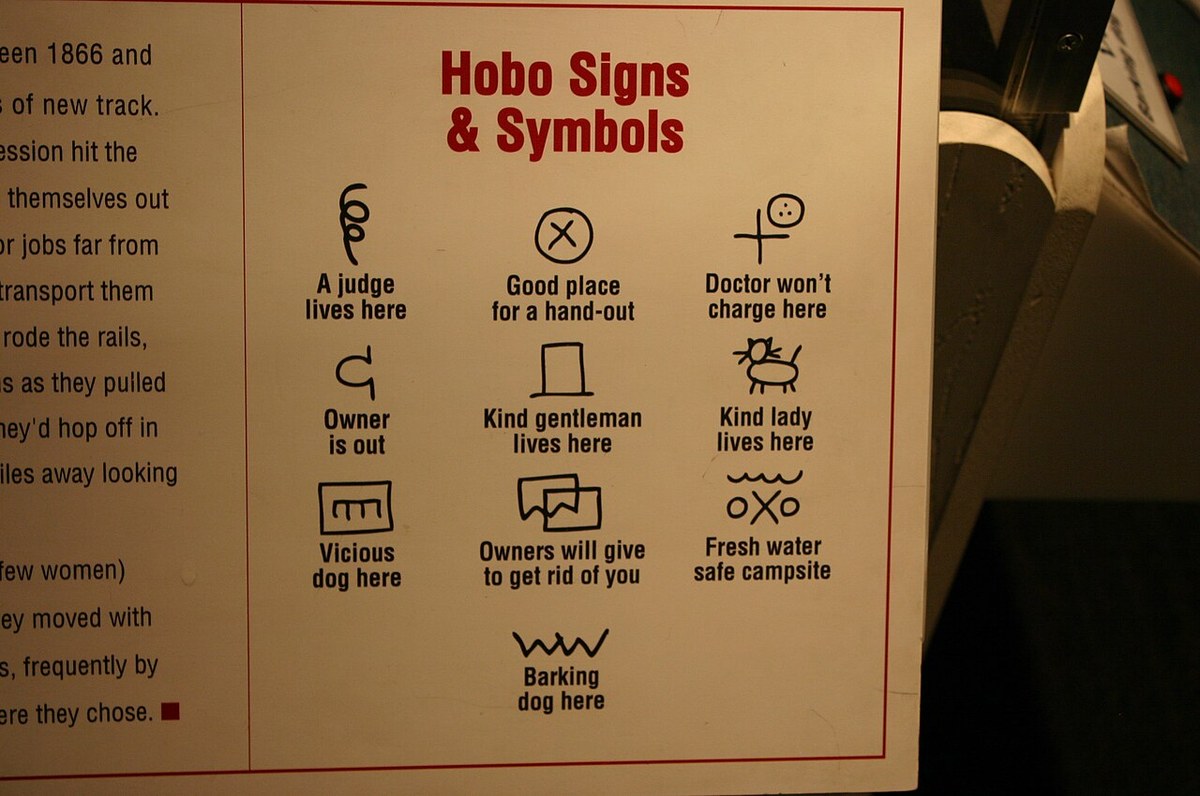
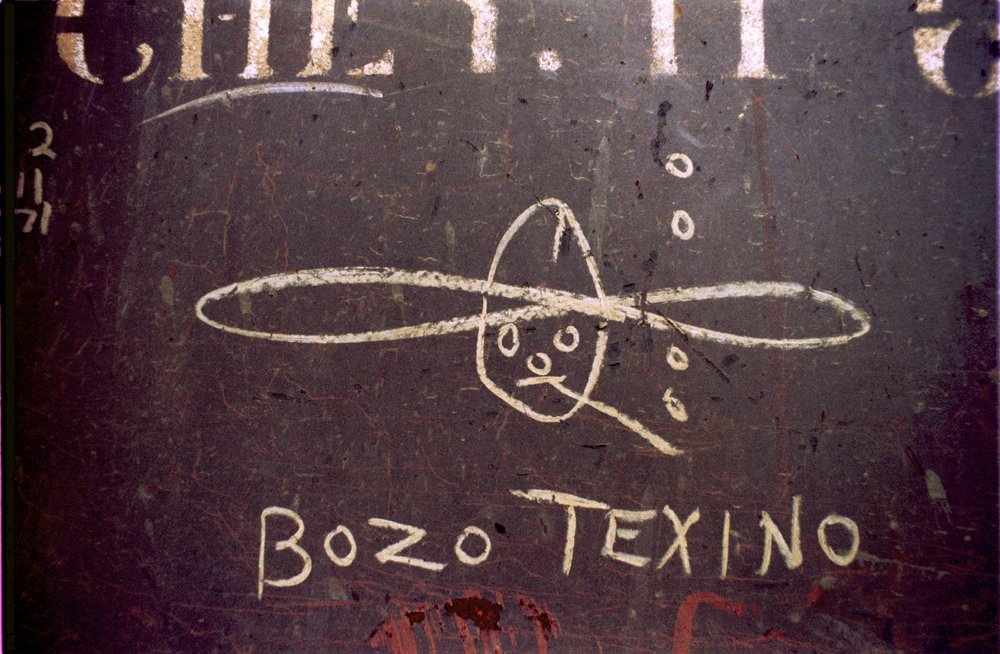
A tourist postcard sells a sheet of “secret hobo signs.” In a jungle, a rider chalks a moniker and a date on a tank—the mark that actually moved information.
Culture and Code asks how riders marked, spoke, and remembered the road. Pictographic “hobo code” charts are famous; documented monikers and oral tips are better history. This chapter keeps the skepticism central: folklore labeled as folklore, steel and water-tank directories treated as evidence, and the next room reserved for the wall of names.
What the Charts Claimed
Commercial charts promised a universal pictographic code: cats for kind women, triangles for danger, hash marks for dogs, circles for kindness or “nothing doing,” depending on which newspaper you believed. They sold to householders who wanted a decoder ring for the strangers at the back door, and to readers who wanted the road to be a puzzle with a key. Leon Ray Livingston—“A-No. 1,” the showman-tramp whose books mixed mileage with myth—helped popularize sign lore in newspaper interviews and in Hobo-Camp-Fire-Tales (1911), printing homemade charts of “signs used by tramps.” A 1908 New York Times dispatch had already named him Ray Livingston of Cambridge Springs, Pennsylvania; the moniker sold books, and the books sold the signs. Staged photographs of freshly chalked symbols followed—hoboes posing, sometimes for a buck. Conflicting dictionaries proliferated: the same simple circle could mean “religious,” “good people,” “bum Jane,” or “get out,” depending on the clipping. Sets that warn you about trolley stops, curses, and whether the lady of the house is home for the next ten minutes look more like entertainment than a working toolkit. That disagreement alone is a warning label.
What Skeptics Found
People who rode and people who studied riders said the same quiet thing for decades. Josiah Flynt, after posing as a tramp for sociology in the 1890s, wrote in Notes of an Itinerant Policeman (1900) that hoboes “do not make use of the marks and signs with which the popular fancy has credited them.” Nels Anderson, who had hoboed himself before Chicago fieldwork, praised Godfrey Irwin’s slang glossary for refusing “the fiction that American tramps have a sign language.” Period papers from Oregon to Boston argued that word of mouth—not gatepost hieroglyphs—carried news of hostile towns and soft touches. The Historic Graffiti Society (Mike and Charlie Wray), after documenting more than a thousand pieces of hobo-era graffiti, reports monikers, dates, and directions of travel in abundance—and has yet to find a verified field example of the tourist pictogram set. They have even found rail-depot ink sketches that copy Livingston’s published charts in places hoboes could never have entered—workers having fun with a book, not a road network. Chalk under eaves can last a century; the cat-and-triangle code has not turned up in that archive. A tiny minority of simple good/bad marks remains possible; a nationwide secret language does not fit the evidence.
What Is Well Documented: Monikers
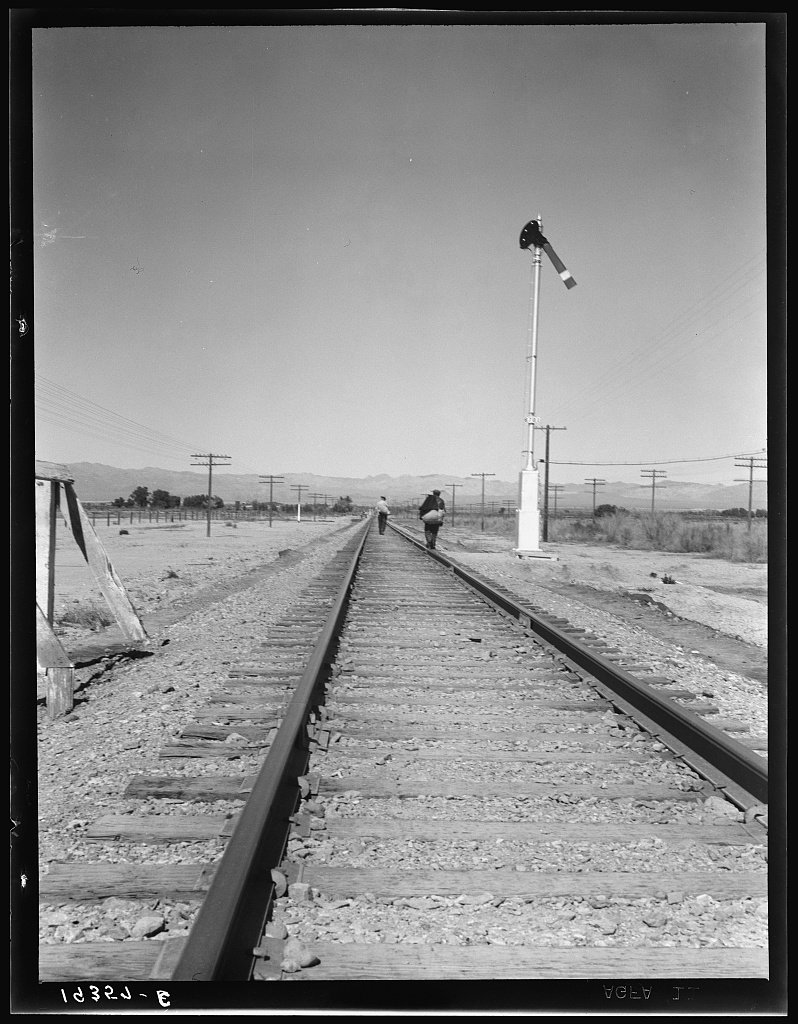
Road names chalked or carved on tanks, bridges, sheds, and cars—with dates and arrows—are widely attested. Jack London called water tanks “tramp directories”: not idle vandalism, but a register of who had passed and which way they were bound. He chased “Skysail Jack” across Canada by reading monicas; he carved his own beside them. That practice is the opposite of a secret code. It is a public guestbook on steel and wood, readable by anyone who knew the culture’s handwriting. Twentieth-century boxcar drawing produced crew folk characters such as Bozo Texino—railworker chalk art that riders also watched for, documented in 1939 railroad press and later film. Personal road names, crew chalk characters, and tourist pictogram myths are three different things. The Moniker wall gathers the first two; this room only needs the contrast.

How Information Really Moved
Spoken tips in jungles, main-stem gossip, employment-agency boards, and newspapers moved job news and “horstile” warnings faster than any chalk triangle. Monikers told you who had passed; mouths told you whether to follow. The Life on the rails room already sends readers here for the hobo-code caveat when “reading a town”; this is the evidence behind that caution. London’s San Marcial, New Mexico, water-tank “bill of fare”—main-drag fair, bulls not hostile, round-house good for kipping, north-bound trains no good—reads as written English notes, not a pictogram key. He would likely have drawn the cats and crosses if that were what he saw. Riders asked each other about towns the way sailors ask about ports. The Oregon Daily Journal put it bluntly in 1907: old-timers’ gatepost stories were not so; hobos told each other how conditions were whenever they met. The only “secret sign” worth a laugh, that paper joked, was a help-wanted notice the average tramp never tried to fathom.
Why the Myth Persists
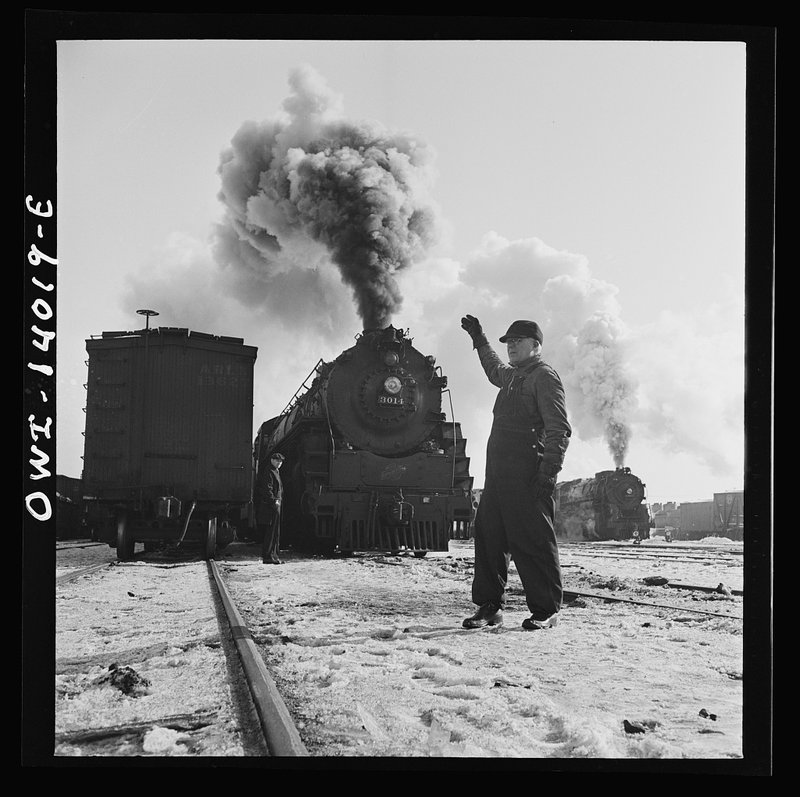
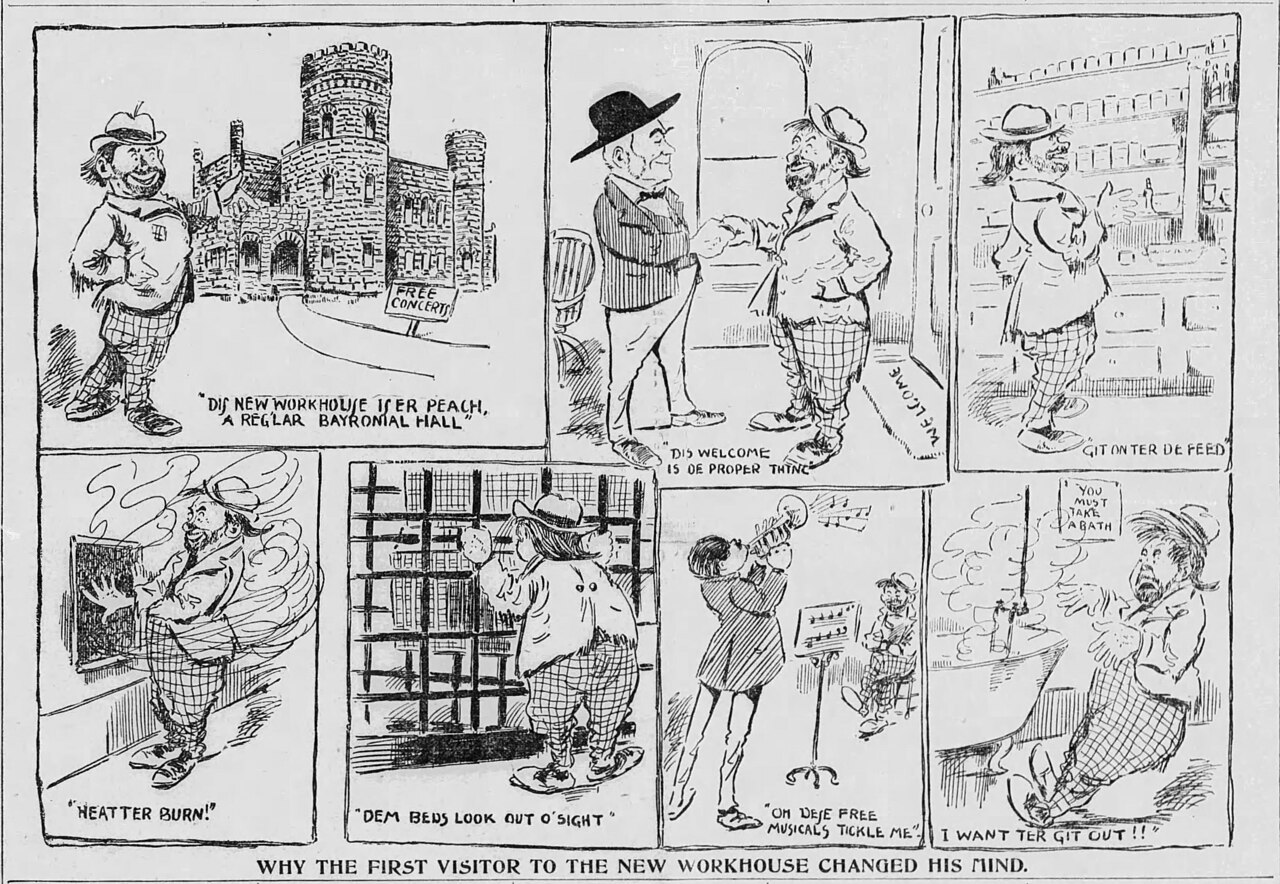
Pictogram sheets flatter readers: a secret language you can learn from a postcard. Monikers demand context—someone else’s name, a date, a direction, a culture of asking. Newspapers needed pictures; Livingston needed sales; later internet lists needed shareable graphics. None of that invents a field archaeology of cats on fences. Homeowners who swore they “must have had a sign” because riders stopped by often lived a block from the tracks during years when millions moved; traffic, not hieroglyphs, explains the knock. Keeping moniker studies, London’s tank directories, Flynt’s and Anderson’s skepticism, and the Historic Graffiti Society’s thousand-plus documented marks visible is how this museum stops folklore from eating history. Women and Black riders still had to read towns under unequal risk (Women on the rails, Black travelers & Jim Crow); the code chart never protected them. The ethical code’s spoken rules and jungle etiquette (Ethical code) did more work than any triangle. When hobo / tramp / bum labels sorted bodies for police, a chalk cat on a fence was never going to sort justice.

A Story of Two Marks
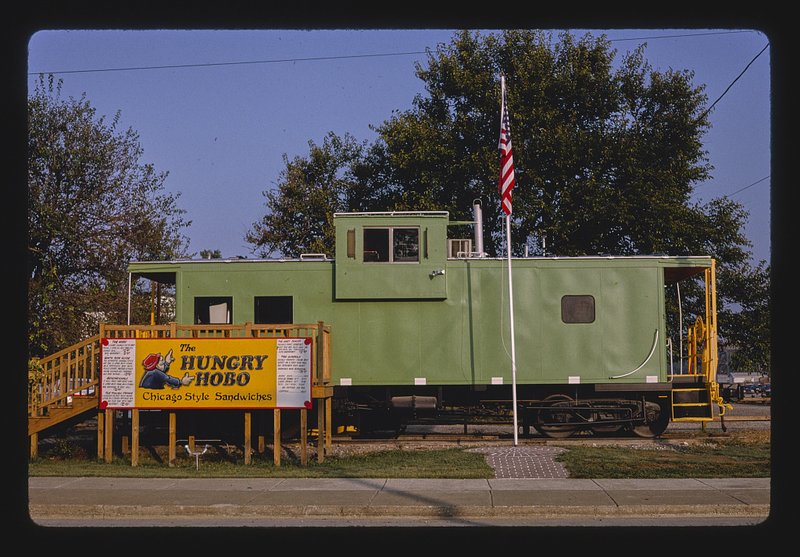
Imagine two objects on a table: a glossy souvenir sign chart and a photograph of a dated moniker on steel. The first sold certainty; the second offers a person who passed. Viral “hobo code” posters bury the real archive under kitsch. Prefer the name, the date, and the arrow—and the mouth that explains them.
The next room is the moniker wall: road names as folk art, not a secret pictograph code.
See Sources for works and archives cited in this room.